Robot Vacuum Suction Power: What Pa Really Means
Shark robot vacuum suction power needs context: Pa measures suction pressure, while brushroll contact, airflow and cleaning passes affect pickup. Choose among these models by floor type, cleaning response and upkeep, since no confirmed Pa figures support a suction ranking.
On this page (8 sections)
- What does Pa mean for Shark robot vacuum suction power?
- Which cleaning features should guide your choice?
- Which Shark robot suits your floors and routine?
- How should pet hair and carpet change your choice?
- How do you set up a robot for useful cleaning coverage?
- What upkeep helps preserve suction and pickup?
- Which suction-power buying mistakes should you avoid?
- Which Shark robot vacuum suction power features should you choose?
Shark robot vacuum suction power is best judged alongside brushroll contact, airflow and floor coverage, rather than by Pa alone. There are no confirmed Pa figures for these 4 models, so choose by the cleaning features that address your home's messes.
For carpet, start with the pile and rug edges your robot must cross. Our guide to choosing a robot vacuum for carpet explains how floor fit affects the buying decision.
What does Pa mean for Shark robot vacuum suction power?
Pa measures pressure difference, not the amount of debris a robot collects. It describes the pull created by the vacuum, while airflow carries loosened dirt through the intake.
The brushroll does a separate job: it disturbs debris and brings it toward that intake. On carpet, its contact with the fibers matters; on hard floors, a clear intake and access to scattered debris matter too.
Compare Pa figures only when the measurement conditions are comparable. A maximum pressure measured at one point in an air path may differ from pressure measured elsewhere, so an unexplained number makes a weak buying guide.
Which cleaning features should guide your choice?
Choose by your main mess, floor type and maintenance routine. A robot needs to reach dirt, loosen it and collect it, so suction is one part of a longer cleaning process.
| Your main concern | Feature to prioritize | Reason |
|---|---|---|
| Hair across several rooms | Brushroll design and planned coverage | Hair needs regular collection before it builds up |
| Dirt concentrated near entrances | Debris response or repeated passes | Busy patches need more attention than clean areas |
| Carpet mixed with hard floors | Floor response and reliable access | Brush engagement and transitions affect coverage |
| Frequent bin emptying | Self-empty base capacity | Storage changes your upkeep routine |
Start with the problem that causes the most work each week. The pet hair and carpet guide covers the wider choices if you're still deciding which features matter most.
Which Shark robot suits your floors and routine?
The AV2501S suits planned repeat coverage, the AV2501AE suits longer intervals between base emptying, the AV2820S suits changing messes, and the AV2110S suits scheduled everyday cleanup. These are feature-based choices, not a ranking of suction strength.
Shark robot vacuum suction power: AV2501S for repeat coverage
The Shark AV2501S suits pet homes that want multiple planned passes over dirt and debris. Matrix Clean follows a grid, and its self-cleaning brushroll addresses hair collection across carpet and hard floors.
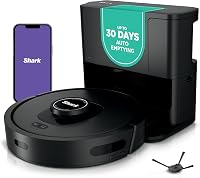
Its bagless self-empty base holds up to 30 days of debris and includes HEPA filtration. That combination suits someone who wants regular vacuuming with fewer trips to empty the robot's small bin.
Choose it for coverage and upkeep convenience rather than automatic dirt-based suction changes. Skip it if that response is your priority, or if a longer interval between base emptying is the main reason you're shopping.
AV2501AE for fewer base-emptying chores
The Shark AV2501AE suits households that want more debris storage while keeping Matrix Clean and a self-cleaning brushroll. Its bagless HEPA self-empty base holds up to 60 days of dirt and debris.
The storage difference makes it worth considering when frequent disposal is your main complaint. Both AI models offer up to 120 minutes of runtime plus Recharge and Resume, so base capacity is the clearer distinction here.
Skip the AV2501AE if you don't mind emptying a base more often and don't need that extra storage. The larger capacity doesn't establish stronger suction than the AV2501S.
AV2820S for uneven dirt and changing surfaces
The Shark AV2820S suits homes where mess levels change from room to room. Shark says DirtDetect senses hidden debris and increases suction and cleaning passes, while FloorDetect adjusts brushroll engagement to the surface.
EdgeDetect uses blasts of air to move debris from edges toward the cleaning path. NeverStuck lifts and lowers the robot to help it cross obstacles and thresholds, making this the feature match for troublesome transitions.
Choose it when automatic response is more useful than a fixed cleaning route alone. Skip it if your floors are mostly open and uniform, and debris storage matters more than those added responses.
AV2110S for scheduled pet-hair cleanup
The Shark AV2110S suits owners who want routine room-by-room cleaning with app controls. SmartPath uses LiDAR mapping for row-by-row coverage, and the brushroll has an anti-hair-wrap design.
The SharkClean app supports schedules, targeted cleaning and no-go zones. Those controls help you focus the routine on places where hair gathers while keeping the robot out of troublesome areas.
Pick it for a regular maintenance schedule with clear room boundaries. Skip it if automatic suction changes are your main requirement, since DirtDetect is the relevant feature on the AV2820S.
How should pet hair and carpet change your choice?
For pet hair, prioritize regular access and a clear brushroll; for carpet, add pile height and transitions to the decision. Loose hair on an open floor presents a different task from hair worked into rug fibers.
Schedule cleaning around the rooms your pets use most. Closing a bedroom door or leaving toys across a narrow passage can prevent collection in that area regardless of suction strength.
Our guide to robot vacuums for pet hair explains how brushrolls and bins fit together. For hair that winds around moving parts, follow the advice on stopping pet hair tangles in a robot vacuum brush.
Treat plush rugs, loose fringe and tall transitions as access checks before buying. Read whether a robot vacuum can handle thick carpet and rugs if those surfaces make up much of your home.
How do you set up a robot for useful cleaning coverage?
Start with a clear dock location and an open mapping route. Follow the model's instructions for dock clearance, then leave the base in that position so returning to it stays predictable.
Open doors to rooms you want included and remove cords, socks and small loose objects. Object detection is useful, but clearing these hazards helps prevent blocked routes and tangled parts.
Watch the first cleaning run to find rug edges, furniture gaps or thresholds that interrupt travel. Where supported, use no-go zones for recurring trouble spots rather than letting the robot struggle there on every run.
Begin with a schedule for the busiest rooms and adjust it to the debris you see. A large weekly pile is harder to manage than smaller, frequent collections.
What upkeep helps preserve suction and pickup?
Keep filters, the intake and moving parts clear so air and debris can travel through the robot. A stronger cleaning setting won't solve a clogged air path.
If pickup drops, check for a full bin, blocked intake or wrapped brush before assuming the motor needs more power. Inspect wheel axles and brush ends too, since hair can collect outside the main brush surface.
Follow the model's care instructions for each filter. Wash only parts approved for washing, and let washed parts dry fully before reinstalling them.
Inspect the base more often during heavy shedding instead of treating its day capacity as a calendar promise. Our guide to cleaning a robot vacuum provides a fuller care routine.
Which suction-power buying mistakes should you avoid?
Avoid invented Pa comparisons and features that solve the wrong problem. Neither a larger base nor a longer runtime proves that one robot has stronger suction.
- Don't rank descriptive words. “Powerful” and “strong” don't provide a measured difference between these models.
- Don't confuse storage with pickup. Base capacity affects disposal chores, not pressure at the intake.
- Don't expect anti-hair-wrap to remove all upkeep. Brush ends and wheels still need inspection.
- Don't buy around an unreachable room. Check door access, rug edges and thresholds before focusing on cleaning modes.
Self-emptying also leaves you with a base to empty and maintain. Read what a robot vacuum self-empty station does if fewer disposal chores are central to your choice.
Which Shark robot vacuum suction power features should you choose?
Choose Shark robot vacuum suction power features by the task you need automated. Use the following decision rules to narrow the field without assigning unsupported suction rankings.
- Choose AV2501S for repeated grid coverage and a self-cleaning brushroll.
- Choose AV2501AE when longer intervals between base emptying matter most.
- Choose AV2820S for automatic response to dirt, surfaces and edges.
- Choose AV2110S for scheduled row-by-row cleaning with targeted areas and no-go zones.
Before ordering, identify the dock space and the rug transition most likely to cause trouble. For a closer look at the first option, read our Shark AI Ultra robot vacuum review.
Frequently asked questions
What does Pa mean on a robot vacuum?
Pa means pascals, a unit of pressure used to describe suction pressure; it measures one part of vacuum operation, while airflow, brushroll contact and coverage also affect pickup. For a useful comparison, check whether figures refer to the same measurement location and operating conditions.
Is higher Pa always better for pet hair?
No, pet hair pickup also depends on brushroll contact, tangles and how often the robot reaches hair-prone areas. A higher pressure figure won't clear a wrapped brush or improve access under blocked furniture; choose a suitable brushroll and cleaning routine alongside any suction measurement.
Do these Shark robot vacuums have confirmed Pa figures?
No confirmed Pa figures are available for these 4 Shark models in this comparison; that means there is no supported suction-pressure ranking between them. If a numeric comparison matters to you, ask Shark for model-specific figures measured under comparable conditions before choosing based on suction.
What matters more than Pa on carpet?
Brushroll engagement, access to the carpet and repeated coverage deserve attention alongside suction pressure. Check your rug pile, fringe and thresholds before choosing a robot; a model that cannot travel across a rug reliably won't clean its full surface, regardless of the pressure figure.