Robot Vacuums for Pet Hair: The Complete Buying Guide
Choose a robot vacuum for pet hair by matching its brush design to your floors, then choosing controls and emptying options you can maintain. Prioritize carpet cleaning for rugs, tangle control for long hair and a self-emptying dock for frequent shedding.
On this page (11 sections)
- What makes a robot vacuum work for pet hair?
- Which brush design suits your pet’s hair?
- Can a robot vacuum for pet hair clean carpet?
- How much mapping and control do you need?
- Is a self-emptying dock worth choosing?
- Do you need a robot vacuum and mop combo?
- Four robot vacuums for pet hair to compare
- How should you set up the first cleaning runs?
- How often should you clean a pet-hair robot vacuum?
- Which buying mistakes create the most extra work?
- How to choose the right robot vacuum for pet hair
A robot vacuum for pet hair works best when its brush design matches your floors and its emptying routine fits the amount your pets shed. Choose those basics first, then decide whether room controls, a self-emptying dock or mopping will save you useful work.
For mixed floors and light mopping, the Roborock Q7 M5+ offers the broadest feature set here. The Roomba 105 Vac suits targeted dry cleaning, the Shark AV2501S suits buyers who want bagless self-emptying, and the ILIFE V2 suits simple cleaning without Wi-Fi.
Use this guide to narrow the choice around your home’s hardest job. For a shorter product shortlist, see our best robot vacuums for pet hair.
What makes a robot vacuum work for pet hair?
A pet-hair robot vacuum needs to collect fur often enough to prevent buildup, reach the areas where it gathers and stay easy to clean. The most useful model is one you can run regularly without spending that saved time clearing blockages.
Pet hair creates different jobs across a home. Loose tufts collect beneath furniture, short strands settle into carpet, and long hair can wind around moving parts.
A robot can handle routine floor pickup while you handle stairs, upholstery and deeper cleaning. It cannot clean a sofa cushion or reach every narrow gap simply because it has a pet-focused brush.
Think about where you currently spend the most time removing fur. Hair beneath a bed calls for furniture clearance, while fur across several rooms makes organized coverage more valuable.
Frequent small cleanups are usually easier to manage than letting a large layer of hair build up. Start with a schedule you can supervise, then adjust it around shedding and the robot’s collection capacity.
Which brush design suits your pet’s hair?
Choose a roller-free suction opening for simple loose-hair pickup on suitable floors, or a hair-resistant brush when you also need a roller to work across carpet. Long hair makes access to brush ends and moving parts especially important.
A brush helps lift debris as the robot moves, but hair can wrap around its shaft and ends. An anti-tangle design aims to reduce that work rather than remove the need for inspection.
A roller-free opening removes the central roller as one place for hair to collect. Side brushes, wheels and the suction passage still need attention.
Long hair needs easy access to moving parts
For long-haired pets, prioritize parts you can reach and clear without a difficult teardown. Human hair matters too, so judge the total hair on your floors rather than your pet’s coat alone.
Look for removable brush covers and follow the manual’s steps for accessing brush ends. If you dislike cutting hair from a roller, make that a buying priority rather than an afterthought.
Avoid pulling hard on wrapped strands while the brush is installed. Remove the part as directed so you can see where the hair is caught.
Our guide to stopping pet hair tangles in a robot vacuum brush explains how to build that check into routine care.
Short fur still needs regular collection
Short-haired pets can leave a large amount of fur even when long tangles are uncommon. In that home, collection capacity and cleaning frequency may save more effort than a specialized long-hair feature.
Look at the whole mix of debris: fur, tracked-in grit, crumbs and dust. A brush that stays clear still needs an open air path and enough room in the bin to collect that mix.
Can a robot vacuum for pet hair clean carpet?
A robot vacuum can collect pet hair from carpet, but pile height, brush contact and rug access should drive your choice. Match the model to the carpet you actually have, including small rugs between rooms.
Low-pile carpet gives a robot a different task from a thick bedroom rug. Deep pile can make movement harder, while strands worked into carpet may need more attention than loose fur on tile.
Check transitions as well as the main floor surface. A robot that cannot cross a rug edge or doorway threshold may leave an entire area outside its useful route.
Loose fringe, curled corners and lightweight mats deserve attention during the first runs. Secure suitable rugs or exclude troublesome ones according to the robot’s instructions.
For deeper rugs, read our guide to robot vacuums for thick carpet and rugs. For a room-by-room buying checklist, see how to choose a robot vacuum for carpet.
Suction numbers need the right context
Use suction figures to understand a model’s stated power, then consider the brush and floor match alongside them. A large number does not tell you whether the robot can cross your rug edge or reach beneath your sofa.
Avoid comparing unlike measurements as though they share a scale. A pressure figure and a brand’s comparison with an older model describe different things.
Extra passes can help when a compatible carpet needs more attention. They also take more time, so focus them on the rooms that collect fur rather than automatically repeating the whole home.
How much mapping and control do you need?
Choose mapping and room controls for several rooms or uneven shedding, and simpler controls when you mainly want to start a straightforward clean. The goal is to reduce daily effort, including time spent managing the robot.
Organized coverage is useful when fur gathers in a bedroom, hallway and living room rather than one open space. Room targeting lets you clean a busy area without always sending the robot through the entire home.
Boundaries can help protect feeding stations, loose cables or a pet’s quiet corner. Set them around the actual space the robot needs to avoid, then observe whether the boundary works as intended.
A simpler robot can suit someone who wants to clear one accessible area and press a button. That choice asks less of your network but may require more physical preparation or room management.
Check who will control the robot
Choose controls that everyone responsible for cleaning can use. A feature-rich app offers little help if only one household member knows how to start a run or handle a warning.
The Roborock Q7 M5+ app supports 2.4 GHz Wi-Fi only, and the Roomba 105 Vac uses a 2.4 GHz network for setup and operation. Check your router settings before planning their connected features.
Voice control can make starting a supported robot easier, but you still need a way to manage its settings. Keep the app or remote accessible to the person who handles care.
Mapping does not make clutter harmless
Clear small objects even when a robot has mapping or object-detection features. Knowing the room layout does not mean every sock, cord or pet toy is safe to leave in its path.
Pet accidents need a separate precaution: check the floor before a scheduled run if your animal may have an accident. Our guide to robot vacuums and pet accidents explains why this matters.
Is a self-emptying dock worth choosing?
A self-emptying dock is worth choosing when manual bin emptying would interrupt frequent cleaning. It is especially useful for a large floor area, several shedding pets or anyone who forgets to empty a small onboard bin.
The dock transfers collected debris into a larger container after cleaning. It does not remove wrapped hair, clean the filter or clear every blockage inside the robot.
Brand estimates measured in days or weeks describe storage under particular use conditions. Treat them as planning guides, then check how quickly your own home fills the container.
Bagged docks suit buyers who want less loose-debris handling
Choose a bagged dock if lifting out a used bag sounds easier than pouring hair from a container. Include replacement bags in your ongoing care plan.
Do not keep using a full bag to stretch the interval between changes. Watch for dock warnings and follow the instructions for checking the transfer path.
Bagless bases suit buyers who prefer a reusable container
Choose a bagless base if you prefer emptying a reusable container and keeping that task in your routine. You will handle the collected debris when you empty it.
Plan where you will empty the container and clean any removable parts. Keep moisture away from parts that must stay dry, and follow the manual before washing anything.
For a closer explanation, read what a self-empty station does. Our self-emptying robot vacuum guide helps compare the care trade-offs.
Give the dock a workable home
Place the dock where the robot can approach it easily and where you can reach its bag or container. Follow the model’s clearance requirements rather than squeezing it into a gap beside furniture.
Keep the route free of pet beds, bowls and moving doors. A station that needs frequent rescue or relocation can erase much of the convenience you bought it for.
Do you need a robot vacuum and mop combo?
Choose a combo for routine fur pickup plus light mopping on suitable hard floors. Choose vacuum-only when carpet dominates or you want fewer wet-cleaning tasks to manage.
A mop is useful after loose hair and dry debris are collected. It adds a separate care routine because a dirty pad needs attention rather than another trip across the floor.
Check your floor’s water-care instructions before using any mopping feature. Use only the water or cleaning solution allowed by the robot’s instructions.
Plan for rugs before starting a wet run. Confirm the correct mop setup and boundaries instead of assuming every combo can manage every mixed-floor layout automatically.
Pet accidents, large spills and sticky messes need direct cleanup before the robot runs. A routine floor mop should not spread those messes through the home.
If mopping is your main reason for paying for more features, make sure you will maintain the pad and water system. Our guide to robot vacuum and mop versus vacuum-only models explains the choice.
Four robot vacuums for pet hair to compare
Choose among these four by floor type, emptying preference and control style. The Roborock offers the widest mix of features, while the other models suit more focused routines.
Roborock Q7 M5+: robot vacuum for pet hair with mopping
The Roborock Q7 M5+ earns 9/10 and suits a mixed-floor home that wants hair-focused brushes, organized cleaning and light mopping in one machine. Choose it when those jobs will all be part of your regular routine.
It combines a JawScrapers main brush with a side brush designed to resist hair wrap. Roborock says this dual anti-tangle system reduces tangles, including hair from long-haired breeds.
Its stated suction is 10,000 Pa, and PreciSense LiDAR supports organized routes across rooms. The app adds schedules, spot cleaning and no-go zones for areas you want to protect.
The RockDock Plus uses a 2.7-liter sealed dust bag. Roborock claims up to 7–9 weeks between bag changes, with the actual interval depending on how much debris your home produces.
For suitable hard floors, the mop module offers 3 water-flow settings. That gives you an extra cleaning option, provided you are willing to manage the pad and wet-cleaning setup.
Skip it if you want remote-only operation or have no use for mopping. A vacuum-only model may better match your routine if dry floor cleaning is the entire job.
Roomba 105 Vac: room targeting and a bagged dock
The Roomba 105 Vac earns 8.2/10 and suits buyers who want focused dry cleaning with a bagged dock. It is a useful fit when certain rooms need more passes than others.
ClearView LiDAR maps the home, while the app lets you target rooms, adjust suction and choose the number of cleaning passes. Keep-out zones help you plan around areas that should stay outside the route.
Its cleaning system uses a multi-surface brush and an edge-sweeping brush. iRobot’s 70X power-lifting suction claim compares it with Roomba 600 series robots, so it is not a direct pressure comparison with the Roborock.
The AutoEmpty dock stores debris in a bag, with iRobot claiming up to 75 days of storage. The brand says the bag traps 99% of allergens as small as 0.7 microns.
You can start cleaning through the app, the robot’s buttons or supported Alexa, Siri and Google Assistant devices. Spot cleaning can repeat work in one area for up to 5 minutes.
Skip it if you want floor mopping or are choosing mainly to avoid central roller care. Its strength here is flexible dry-cleaning control, and its brushes still need regular checks.
Shark AV2501S: a bagless self-empty base
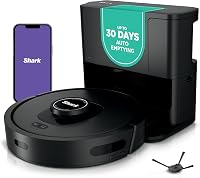
The Shark AV2501S earns 8/10 and suits buyers who want self-emptying without replacement dust bags. Choose it if emptying and caring for a reusable base container fits your habits.
Its self-cleaning brushroll is designed to reduce hair wrap. Matrix Clean uses a grid with multiple passes, making repeated coverage a central part of its cleaning approach.
The robot uses 360-degree LiDAR mapping. Through the SharkClean app, you can schedule runs, target areas and set boundaries, with Alexa and Google Assistant available for voice control.
Shark claims up to 30 days of debris storage in the bagless base. The brand also says the base’s HEPA filtration captures 99.97% of dust and allergens down to 0.3 microns.
Runtime is up to 120 minutes, and Recharge and Resume lets the robot recharge before continuing its cleaning job. That feature matters when one charge does not finish the planned route.
Skip it if your priority is removing debris in a bag or adding mopping. The bagless base reduces one supply item, but it leaves you responsible for emptying its contents.
ILIFE V2: remote control without Wi-Fi
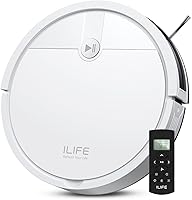
The ILIFE V2 earns 7.4/10 and suits buyers who want simple hair pickup on hard floors and low-pile carpet. Choose it when avoiding network setup matters more than app-based room controls.
Its suction opening has no central roller brush, removing that particular place for hair to wrap. The physical remote and one-touch button let you operate it without Wi-Fi.
At 2.99 inches tall, it is worth considering for low furniture. Measure the lowest point beneath the furniture, including sagging fabric or braces, and leave room for the robot to move freely.
The V2 has a 300 ml bin, preset scheduling and auto, spot and edge cleaning modes. It runs for up to 120 minutes and returns to its charging dock when the battery is low.
Its route is not predefined, so it suits buyers comfortable with simpler coverage rather than mapped room selection. Expect to empty its onboard bin as part of the routine.
Skip it for thick carpet, mapped room targeting or self-emptying. Its appeal is a straightforward dry-cleaning setup, with clear limits on the jobs it is designed to handle.
How should you set up the first cleaning runs?
Start with a clear floor and supervised runs, then build a schedule around the route that works. Early setup should reveal troublesome furniture, rugs and transitions before cleaning becomes automatic.
Prepare the route before starting
Pick up cords, socks, small toys and loose fabric. Move light objects that could be dragged, and check beneath furniture where hidden cables often sit.
Leave useful access between rooms rather than blocking every doorway with temporary storage. If you only want one area cleaned, use the model’s supported controls or a suitable physical boundary.
Place pet bowls and beds where the robot will not repeatedly disturb them. Keep an accessible path to water for your pet throughout the run.
Watch the difficult areas
Pay attention at rug edges, thresholds and furniture legs. If the robot repeatedly struggles in one spot, change the layout or exclude that area using an available boundary method.
For mapped models, review the map and room divisions before relying on targeted schedules. Give rooms clear names so everyone in the household can choose the correct area.
Watch your pet’s response too. Begin while you are nearby, let the animal move away freely and avoid scheduling the first runs during meals or rest.
Build the schedule from real debris
Inspect the bin after early runs to see how quickly it fills. During heavy shedding, shorter and more frequent sessions may be easier to maintain than occasional whole-home cleanup.
Choose a time when the floor can be clear and your pet is comfortable. Adjust room order or cleaning times if a routine repeatedly leaves doors closed or bowls in the path.
How often should you clean a pet-hair robot vacuum?
Check collection and moving parts after the first few runs, then set a care interval based on what you find. Heavy shedding, long hair and frequent cleaning call for closer attention.
A dock can hide how much debris the robot collects, so keep checking the robot itself. Reduced pickup, unusual sounds or repeated interruptions are reasons to inspect it sooner.
After a run
Check the onboard bin or dock status and remove any visible obstruction. If a mop was used, handle its pad and water parts as directed rather than leaving dirty material ready for the next run.
Look for hair caught around side brushes and wheels. Clear small amounts before they become tightly wound bundles.
During regular care
Turn the robot off before removing parts, following the manual’s instructions. Clear the main brush or suction opening, brush ends, wheel areas and debris transfer path.
Clean sensors and charging contacts using the approved method. Dust on these areas can interfere with movement or docking even when the brush looks clear.
Care for filters exactly as directed, and wash only parts approved for washing. Allow washable parts to dry fully before putting them back.
For the full sequence, use our guide on how to clean a robot vacuum. Keep spare consumables suited to your exact model so a worn filter or full bag does not stop the routine.
Which buying mistakes create the most extra work?
The biggest mistakes are buying for one headline feature and ignoring daily access, emptying and care. A robot saves effort when its routine fits the home you already have.
- Choosing by suction alone. Check floor compatibility, brushes, rug transitions and coverage before using power as a deciding factor.
- Measuring only the open floor. Measure furniture clearance, narrow passages and the space needed to reach the dock’s collection container.
- Treating storage estimates as a care schedule. Check actual fill levels, especially during seasonal shedding or after the first deep cleanup.
- Expecting anti-tangle parts to stay clear forever. Include side brushes, wheels and brush ends in your inspections.
- Adding mopping without planning for rugs. Confirm the wet-cleaning setup before sending a combo through mixed flooring.
- Expecting one robot to cover separate floors. Stairs remain a barrier, and carrying the robot adds work to the routine.
Avoid buying extra features to solve a problem that is really clutter or poor dock placement. Clear access can improve the usefulness of a suitable robot without changing the machine.
Also keep a regular vacuum available for stairs, upholstery and deeper carpet work. The robot’s main value is reducing the loose hair that accumulates between those jobs.
How to choose the right robot vacuum for pet hair
Choose your robot vacuum for pet hair by solving the job that costs you the most effort. Settle the floor match first, then choose the emptying method and controls you will use consistently.
Pick the Roborock Q7 M5+ for mixed-floor cleaning with light mopping and hair-focused brushes. Pick the Roomba 105 Vac for targeted dry cleaning with a bagged dock.
Choose the Shark AV2501S when you want self-emptying and prefer a reusable base container. Choose the ILIFE V2 for hard floors or low-pile carpet when remote control and a simpler setup are the priorities.
Before ordering, confirm 3 things: the robot can reach your shedding hotspots, the dock has a workable location, and you accept the required care. Those checks turn a feature shortlist into a practical choice.
For the next step, compare our best robot vacuums for pet hair against the needs you identified in your own rooms.
Frequently asked questions
What should I look for in a robot vacuum for pet hair?
Start with a brush or suction opening suited to your floors and your pet’s hair, then choose manageable emptying and cleaning controls. Long hair makes brush access important, while heavy shedding makes bin capacity useful; measure furniture clearance and leave space for the dock before choosing a model.
Do robot vacuums pick up pet hair on carpet?
Robot vacuums can collect pet hair from carpet, especially when frequent runs keep loose fur from building up. Match the model to your carpet pile and check rug edges, fringe and transitions; keep a full-size vacuum for deeper cleaning and areas the robot cannot reach, including stairs and upholstery.
Is a self-emptying robot vacuum useful for pet hair?
A self-emptying robot vacuum is useful when frequent shedding would otherwise mean frequent manual bin emptying. Choose a bagged dock if you prefer removing a closed bag, or a bagless base if you prefer emptying a reusable container; both still need brush, filter and suction-path care.
Should I choose a robot vacuum and mop for a home with pets?
Choose a combo when you have suitable hard floors and want light mopping alongside regular fur pickup. Check your flooring’s care instructions and how the robot should handle rugs before using water; mostly carpeted homes may get more value from a vacuum-only model with controls that suit their routine.