6 Best Robot Vacuums for Pet Hair (October 2026)
The best robot vacuums for pet hair include the Roborock Q7 M5+ for everyday shedding across several rooms, the Roborock Q10 S5+ for mixed floors that need mopping, and the Roomba 105 Vac for vacuum-only pet homes.
On this page (7 sections)
- The 6 best robot vacuums for pet hair
- How we chose these pet-hair picks
- How to choose the best robot vacuum for pet hair
- Set up your robot for reliable daily fur pickup
- Keep brushes and docks clear during shedding season
- Common mistakes that make pet-hair cleanup harder
- Which best robot vacuum for pet hair fits your home?
The Roborock Q7 M5+ is the best robot vacuum for pet hair for most homes because its anti-tangle brushes, mapped routes, and self-empty dock fit regular fur cleanup. Choose around your floors and maintenance habits, then decide whether mopping or obstacle recognition deserves extra weight.
A robot works best as a frequent floor cleaner that catches loose fur before it gathers under furniture or gets pressed into carpet. Keep a separate vacuum for stairs, upholstery, and deeper cleaning where needed.
For the broader buying criteria, see our complete robot vacuum guide for pet hair. If carpet covers most of your home, start with our advice on choosing a robot vacuum for carpet.
Our picks at a glance
-
1
-
2

-
3
The 6 best robot vacuums for pet hair
The Q7 M5+ is our first choice for routine shedding, while the other picks address mixed floors, vacuum-only care, bagless collection, or busy pet areas. Use the comparison to narrow your choices by brush, dock, and navigation before reading the individual recommendations.
| Product | Best for | Brush design | Dock | Navigation | Our score |
|---|---|---|---|---|---|
| Roborock Q7 M5+ | everyday shedding across several rooms | JawScrapers main brush and anti-tangle side brush | 2.7 L sealed dust bag | PreciSense LiDAR | 9.0 |
| Roborock Q10 S5+ | mixed floors that need mopping | JawScrapers Comb main brush and anti-tangle side brush | 2.7 L dust bag | LiDAR and structured-light obstacle avoidance | 8.5 |
| Roomba 105 Vac | vacuum-only pet homes | Multi-Surface brush and Edge-Sweeping brush | AutoEmpty dock with bag | ClearView LiDAR | 8.2 |
| Shark AV2501S | bag-free daily emptying | Self-cleaning brushroll | Bagless base with up to 30 days of capacity | LiDAR and Matrix Clean | 8.0 |
| Roomba Max 715 | cluttered pet areas | Dual rubber anti-tangle brushes and anti-tangle side brush | AutoEmpty dock with odor-control bag | ClearView Pro LiDAR and PrecisionVision AI | 7.9 |
| Shark AV2501AE | fewer bag-free emptying trips | Self-cleaning brushroll | Bagless XL base with up to 60 days of capacity | LiDAR and Matrix Clean | 7.8 |
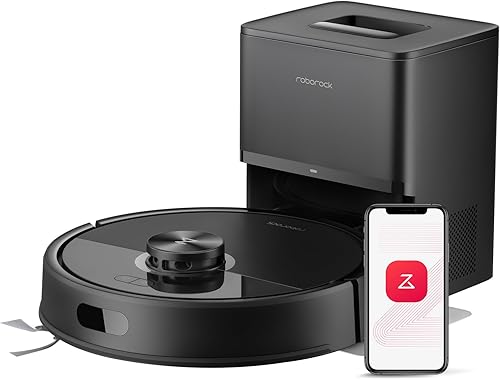
Roborock Q7 M5+: Best for everyday shedding across several rooms
- Dual anti-tangle brushes
- 10,000 Pa suction
- Bagged self-empty dock
- PreciSense LiDAR mapping
A practical first choice for scheduled fur cleanup across several rooms. Its anti-tangle main and side brushes address hair wrap, while a bagged dock handles collected debris.
Pros
- Anti-tangle main and side brushes
- Room mapping and no-go zones
- Optional mopping with adjustable water flow
Cons
- Replacement dock bags needed
- App requires 2.4 GHz Wi-Fi
Choose the Q7 M5+ if your main job is collecting loose fur across several rooms on a schedule. Roborock designs its JawScrapers main brush and anti-tangle side brush to reduce wrapping, including hair from long-haired breeds.
It combines 10,000 Pa suction with PreciSense LiDAR mapping. The app supports scheduled runs, spot cleaning, and no-go zones, so you can keep the robot away from a feeding mat while cleaning nearby floors.
RockDock Plus uses a 2.7 L sealed dust bag, with Roborock claiming up to 7 to 9 weeks between changes. Treat that as a storage estimate and check sooner when pets shed heavily.
The mop module has 3 water-flow settings for hard-floor wiping. It adds flexibility, but you'll need to manage the pad and keep unsuitable surfaces out of its wet-cleaning route.
Skip this model if automatic mop lifting or dedicated obstacle avoidance is central to your choice; the Q10 S5+ addresses those needs. Compare the best robot vacuum and mop combos for pet hair if wet cleaning will be a regular part of your routine.
Roborock Q10 S5+: Best for mixed floors that need mopping
- Dual anti-tangle brushes
- Structured-light obstacle avoidance
- Lifting sonic mop
- Automatic carpet suction boost
Choose this model when hard-floor mopping matters alongside fur pickup. Carpet detection, mop lifting, and obstacle avoidance give it a clearer role in mixed-floor homes.
Pros
- Sonic mopping with carpet detection
- Obstacle avoidance
- Multi-level mapping
Cons
- Mop needs cleaning after use
- App requires 2.4 GHz Wi-Fi
Choose the Q10 S5+ when your home has hard floors that need wiping as well as rugs that collect fur. Its main advantage over the first pick is the combination of a more capable mop system and structured-light obstacle avoidance.
VibraRise 2.0 uses sonic vibration, and the mop lifts up to 8 mm when carpet is detected. That clearance needs to suit your rugs, so don't assume every thick or plush surface will stay clear of a damp pad.
The robot pairs dual anti-tangle brushes with 10,000 Pa suction and automatic carpet boost. Its LiDAR system supports multi-level mapping, though you still need to move the robot between floors.
A 2.7 L bag collects debris in the self-empty station, with Roborock claiming up to 70 days between changes. The mop still needs attention after use, regardless of how much room remains in the dust bag.
Skip it if you only want dry cleaning and would leave the mop unused. Its extra functions are most useful when you plan to manage carpet boundaries, clean the pad, and adjust wet-cleaning settings.
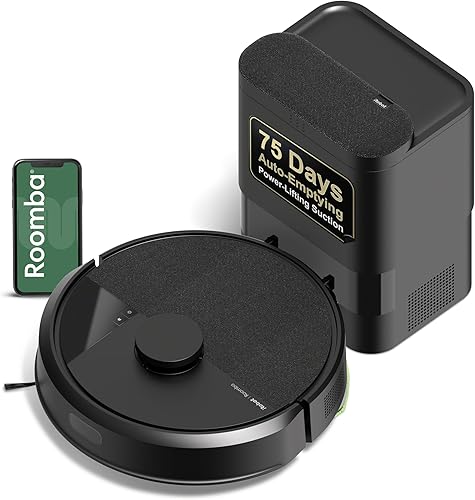
Roomba 105 Vac: Best for vacuum-only pet homes
- Bagged AutoEmpty dock
- Room targeting and keep-out zones
- Adjustable cleaning passes
- ClearView LiDAR mapping
A focused choice for dry floor cleaning without mop care. Room targeting and adjustable passes let you give fur-heavy areas more attention.
Pros
- No mop module to maintain
- Targeted room and spot cleaning
- App, button, and voice controls
Cons
- Brushes need regular hair checks
- Requires 2.4 GHz Wi-Fi for setup and operation
The Roomba 105 Vac suits pet owners who want vacuuming without mop care. It gives you room targeting, keep-out zones, and adjustable cleaning passes without adding a wet pad to the routine.
ClearView LiDAR organizes coverage, while a Multi-Surface brush and Edge-Sweeping brush handle dry debris. You can give the living room extra passes after pets spend the day there instead of cleaning every room equally.
Its spot mode repeats cleaning in one area for up to 5 minutes. That suits a patch of loose fur, but food spills with liquid and pet accidents need manual cleanup first.
iRobot claims up to 75 days of storage in the bagged AutoEmpty dock. Check the brush ends regularly, especially if long human hair joins the pet fur on your floors.
Choose this model when targeted dry cleaning is enough and you prefer a simpler care routine. Skip it if a named anti-tangle brush system or mopping is a firm requirement rather than a nice extra.
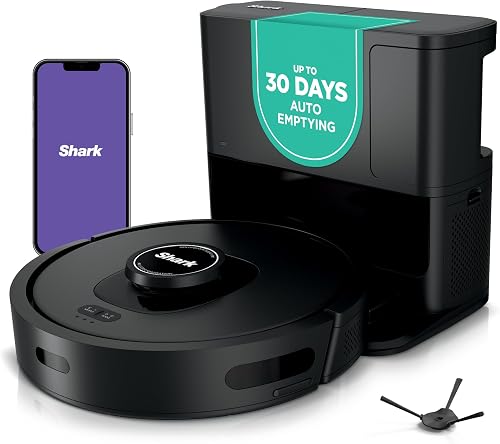
Shark AV2501S: Best for bag-free daily emptying
- Bagless self-empty base
- Self-cleaning brushroll
- Matrix Clean grid passes
- Recharge and Resume
Pick this Shark if you prefer emptying a reusable base to replacing dock bags. Its shorter storage interval suits someone comfortable checking collected fur regularly.
Pros
- No replacement dock bags
- HEPA filtration in the base
- Multiple-pass grid cleaning
Cons
- Base emptying involves direct debris handling
- Shorter claimed storage interval than the other picks
Choose the Shark AV2501S if you prefer a reusable collection bin to replacement dock bags. It suits someone who already checks cleaning equipment regularly and is comfortable tipping collected fur into the trash.
Shark claims up to 30 days of debris storage in its bagless base. The base has true HEPA filtration, which Shark says captures 99.97% of dust and allergens down to 0.3 microns.
That filtration describes particle capture inside the system; opening and emptying a bagless bin is still a separate dust-handling task. If avoiding direct contact with collected debris matters most, favor a bagged dock.
The self-cleaning brushroll addresses hair wrap, while Matrix Clean uses multiple passes in a grid. LiDAR mapping organizes coverage, and Recharge and Resume lets it continue a cleaning job after charging.
Skip this version if your main goal is the longest interval between base emptying. The AV2501AE below offers a longer claimed storage interval with several shared cleaning features.
Roomba Max 715: Best for cluttered pet areas

- Dual rubber anti-tangle brushes
- PrecisionVision AI obstacle recognition
- Dirt Detect extra passes
- Odor-control dock bag
Consider this Roomba when everyday objects interrupt cleaning around pet areas. iRobot says its obstacle recognition responds to bowls, toys, cords, and pet waste.
Pros
- Recognition of common pet-area objects
- Anti-tangle rubber brush system
- Extra passes in messier areas
Cons
- Floor checks still needed around pet accidents
- Up to 120 minutes of battery life
Consider the Roomba Max 715 when toys, bowls, and stray clothing often interrupt floor cleaning. Object recognition is its clearest reason to choose it, rather than its suction number alone.
iRobot says PrecisionVision AI identifies and responds to pet bowls, toys, cords, socks, shoes, and pet waste. Keep checking floors for accidents before every run, even with this feature.
Its dual rubber brushes and side brush use anti-tangle designs. Carpet Boost increases suction on rugs, while Advanced Dirt Detect adds cleaning passes where debris builds up.
ClearView Pro LiDAR creates 3D maps for room-by-room routes. The AutoEmpty dock uses an odor-control AllergenLock bag, with iRobot claiming up to 90 days of debris storage.
The specified 30,000 Pa suction doesn't establish a threefold cleaning advantage over a robot with one-third that figure. Choose it for the combined brush, object-recognition, and dirt-response features.
Skip it if you routinely clear the floor and only need predictable scheduled fur pickup. A simpler choice may fit that job without making object recognition central to your decision.
Shark AV2501AE: Best for fewer bag-free emptying trips

- Bagless XL HEPA base
- Self-cleaning brushroll
- Matrix Clean grid passes
- Recharge and Resume
The longer claimed storage interval makes this the Shark to consider when base emptying is your main concern. It retains bagless debris collection and a self-cleaning brushroll.
Pros
- Longer claimed storage than the AV2501S
- No replacement dock bags
- HEPA filtration in the base
Cons
- Collected debris must be emptied by hand
- Up to 120 minutes of runtime
Choose the Shark AV2501AE when you want bagless collection but prefer fewer base-emptying trips. Shark claims up to 60 days of storage in the XL base, compared with the shorter interval for the AV2501S.
Both Shark picks have a self-cleaning brushroll, LiDAR mapping, and Matrix Clean grid passes. That makes debris storage the clearest practical difference to weigh between them here.
The XL base includes HEPA filtration, and the robot supports Recharge and Resume. You can schedule cleaning or use compatible voice controls to start a run.
A longer storage estimate doesn't mean you should leave damp debris or a blocked collection path untouched. Check the base sooner during heavy shedding and clean only the dry floor debris the robot is meant to collect.
Skip this model if bagless emptying itself is the task you dislike. More storage delays that chore, while a bagged alternative changes how you dispose of the collected fur.
How we chose these pet-hair picks
We prioritized brush maintenance, floor coverage, and debris disposal because these determine whether frequent fur cleanup fits daily life. PeachyCart compared the supplied features and specifications to match each robot with a clear household need.
Anti-tangle designs earned attention because wrapped hair creates recurring work. Mapping and room controls also matter: a robot needs to reach the places where pets rest, play, and shed.
The scores reflect those priorities across the full package. A lower-ranked robot can still be the better purchase when its dock style or wet-cleaning features match your home more closely.
How to choose the best robot vacuum for pet hair
Start with your floor mix and the maintenance you want to reduce. Then use coat length, room layout, and cleaning frequency to separate the remaining options.
Which robot vacuum features matter for pet hair?
Brush access and hair control matter most when pets shed long strands or share floors with long human hair. Look for a design that reduces wrapping, but also make sure routine removal and cleaning won't become a chore you avoid.
Short fur creates a different problem: it can spread widely and collect quickly. Frequent room coverage and timely emptying may matter more than a complicated set of cleaning modes.
For several pets, plan around the total debris load rather than breed labels. Fur, tracked-in dirt, and everyday crumbs all use collection space, so a dock's maximum storage estimate may be unrealistic for your household.
Does your carpet need more than a high suction number?
Carpet needs brush contact, suitable suction, and repeated access to fur-heavy areas. Use Pa figures as one specification rather than a shortcut to ranking complete cleaning systems.
Check rug edges, loose fringe, and changes in floor height before choosing where the robot will run. A machine that repeatedly stalls at a rug edge can't maintain the room beyond it.
Deep pile and firmly embedded hair can still call for a separate vacuum. Our guide to robot vacuums for thick carpet and rugs explains the floor checks to make before relying on daily automation.
Would you rather change a bag or empty a bin?
Choose bagged collection for simpler debris disposal, or bagless collection if avoiding replacement dock bags matters more. All 6 picks move collected dirt into a base, but the final emptying task differs.
A sealed bag lets you remove the collected debris as a package. A reusable bin needs opening and tipping out, which makes your tolerance for dust handling part of the buying decision.
Capacity claims describe potential storage, not a maintenance calendar. Check how quickly your own household fills the dock before deciding on a bag-change or emptying routine.
Do you need wet cleaning after fur pickup?
Choose a mop feature if you also want regular wiping on suitable hard floors. Fur removal is the vacuum's job, so mopping should solve a separate need rather than decide the purchase by itself.
Think about the whole wet-cleaning routine: checking floor compatibility, preparing the pad, protecting rugs, and washing the pad afterward. A dirty pad can drag residue through rooms even when vacuum collection is working normally.
The vacuum-and-mop versus vacuum-only comparison can help you decide whether that extra routine fits your home.
Will the robot fit your layout and controls?
Check furniture clearance, dock access, and doorway transitions before buying. A mapped route still needs a clear physical path, and the robot needs room to approach its charging base.
Avoid treating dimensions that include a dock as the robot's own clearance measurement. Measure the lowest furniture you want cleaned beneath and confirm the relevant robot dimensions before ordering.
Both Roborock picks require 2.4 GHz Wi-Fi for their apps, and the Roomba 105 uses it for setup and operation. Our guide to robot vacuum Wi-Fi requirements explains the connection questions to settle before setup.
Set up your robot for reliable daily fur pickup
Give the robot a clear dock approach and a prepared first route. Good setup reduces avoidable stops and makes the cleaning map more useful.
Prepare the floor before the first run
Pick up charging cables, socks, small toys, and loose items that can catch moving parts. Secure rug fringe and check lightweight mats that may bunch when crossed.
Clear pet waste and wet spills yourself before starting. For homes where accidents happen, our guide to robot vacuums and pet accidents explains why object avoidance still needs a floor-check routine.
Give pets a calm place away from the first cleaning route. Let them get used to the moving robot without making its first session a chase or a feeding-time interruption.
Build a map around everyday access
Follow the model's mapping instructions with doors open to the rooms you want included. Keep the dock in its intended long-term spot so the starting point stays consistent.
Use supported boundaries to protect water bowls, loose feeding mats, and places where the robot gets trapped. Leave useful access around pet beds where fur collects, rather than blocking the entire area unnecessarily.
Start with short, observed cleaning sessions
Watch the first few runs to find trouble spots such as narrow chair gaps and rug transitions. Adjust the room layout or boundaries before moving to unattended schedules.
Start with the rooms that gather the most fur, then expand coverage. Shorter targeted jobs make it easier to see whether the robot can finish, return, and transfer debris without problems.
Schedule around your pet's routine as well as yours. A run after active play may catch loose fur, while a run during meals can disturb bowls or make pets avoid their feeding space.
Keep brushes and docks clear during shedding season
Inspect the brush, wheels, and debris path early and often until you learn your home's maintenance pace. Anti-tangle features reduce one source of work but don't remove hair from every moving part.
After the first few cleaning sessions, check the main brush ends and side-brush hub. Long strands can collect at an axle even when the visible brush surface looks clear.
Look at the robot bin and transfer opening if fur remains after the dock empties it. Packed hair or a blockage needs attention before another cleaning run adds more debris.
Maintain filters according to the model's instructions. Wash only parts approved for washing, and let them dry fully before putting them back into service.
Wipe sensors and charging contacts using the care method the brand recommends. Dust on those surfaces can interfere with movement or charging even when the brushes are clean.
Wash and dry a used mop pad promptly, and don't leave wet-cleaning parts dirty between sessions. Keep liquids away from dry debris collection areas.
Our guide to cleaning a robot vacuum walks through these tasks. During peak shedding, shorten the inspection interval rather than waiting for weak pickup or repeated error messages.
Common mistakes that make pet-hair cleanup harder
The biggest mistake is expecting automation to replace floor preparation and all other vacuuming. A robot handles recurring reachable floor debris, while stairs, furniture, and stubborn embedded fur remain separate jobs.
Waiting until fur forms clumps
Run the robot often enough to collect loose hair before it gathers into thick piles. If your floors already have a heavy buildup, clear that first so the robot starts with a manageable daily job.
Increase frequency based on what remains between runs. A high-shedding room may need more attention than a lightly used bedroom, even when both have the same flooring.
Using maximum power for every job
Match settings to the floor and debris instead of automatically choosing the highest suction. Stronger settings can use battery faster, and an unnecessarily demanding whole-home schedule may take longer to finish.
Give difficult rooms extra attention through supported passes or targeted cleaning. Adjust one setting at a time so you can tell whether it solves the problem.
Treating obstacle recognition as permission to leave everything down
Clear items that could wrap, spill, or become damaged even when the robot has avoidance features. A tidy route gives the machine more floor to clean and fewer objects to work around.
Ignoring what the robot leaves behind
Check whether missed fur sits in an unreachable corner, beneath low furniture, or on a blocked route. More suction won't solve a physical access problem.
If reachable areas stay dirty, inspect the brush and collection path before changing the schedule. Maintenance and route fixes are often more useful than repeatedly rerunning the same job.
Which best robot vacuum for pet hair fits your home?
Choose the Q7 M5+ for regular shedding across mapped rooms when hair control is your main priority. Move to the Q10 S5+ if you will use its lifting sonic mop on a home with mixed floors.
Pick the Roomba 105 Vac for targeted dry cleaning without mop upkeep. Favor the Max 715 when recognition of toys, bowls, and other everyday objects is the feature that best addresses your cleaning interruptions.
For bagless collection, choose the AV2501S if regular base checks already fit your routine. Choose the AV2501AE if fewer emptying trips matter more.
The best robot vacuum for pet hair is the one whose routine you'll keep: reachable floors, clear brushes, and a dock you empty on time. Use our complete guide to robot vacuums for pet hair to check your floor plan and care needs before making the final choice.
Our top 3 picks at a glance
-
1
-
2
-
3
Frequently asked questions
What matters most in a robot vacuum for pet hair?
Prioritize brush design, reliable room coverage, and debris handling that fits your routine. Long hair makes brush-end access especially useful, while heavy shedding makes frequent cleaning and dock checks more important; choose mop features only if you also need hard-floor wiping.
Are self-emptying robot vacuums useful for pet hair?
Yes, a self-empty dock reduces the need to empty a fur-filled robot bin after cleaning. Bagged docks simplify debris disposal, while bagless bases need manual emptying; our guide to self-emptying robot vacuums explains how storage, replacement bags, and dust handling affect that choice.
Will a robot vacuum pick up pet hair on carpet?
A robot can collect pet hair from carpet, especially when frequent runs prevent buildup. Dense pile, fringe, and embedded fur can still require a separate vacuum; our guide to robot vacuums on carpet explains how floor type changes the job.
How do you reduce hair tangles in a robot vacuum?
Choose an anti-tangle or self-cleaning brush, then remove hair from brush ends, axles, and wheels before it builds up. Inspect more often during shedding season or with long-haired pets; our guide to stopping pet hair from tangling covers the parts that need attention.