7 Best Robot Vacuum and Mop for Pet Hair (October 2026)
The best robot vacuum and mop combos for pet hair include the Roborock Q7 M5+ for homes with heavy shedding, the Roomba 105 Combo for hard floors dotted with rugs, and the Roborock Q10 S5+ for mixed floors with low-pile rugs.
On this page (7 sections)
- The best robot vacuum and mop for pet hair by household
- How should your floors and pet hair change the choice?
- Which dock chores will you still need to do?
- How should you set up a combo robot in a pet home?
- How do you keep hair pickup and mopping useful?
- What mistakes make a pet-hair combo less useful?
- Which is the best robot vacuum and mop for your pet home?
The Roborock Q7 M5+ is the best robot vacuum and mop for pet hair for homes that need frequent fur pickup with less brush work and bin emptying. Choose the Roomba 105 Combo if keeping a wet mop off rugs is your first concern.
The right combo should match both your floors and the chores you will still do yourself. Vacuuming loose hair, wiping paw marks and washing dirty mop pads are separate jobs, even when one machine handles several of them.
For the broader choices behind these picks, start with our complete robot vacuum guide for pet hair.
Our picks at a glance
-
1
-
2
-
3

The best robot vacuum and mop for pet hair by household
The Q7 M5+ is the first choice for shedding-heavy homes, while the other picks solve more specific problems. Carpet avoidance, mop lifting, automatic pad care and bagless emptying can each matter more than the top overall position.
We compared brush design, floor handling, cleaning controls and upkeep. Use the table to narrow your choices, then read the matching section for the reason to buy or skip each model.
| Product | Best for | Hair care | Dock | Mopping | Our score |
|---|---|---|---|---|---|
| Roborock Q7 M5+ | homes with heavy shedding | Dual anti-tangle design | Bagged self-emptying | 3 water-flow settings | 9.0 |
| Roomba 105 Combo | hard floors dotted with rugs | Multi-surface brush | Bagged self-emptying | Avoids carpet | 8.8 |
| Roborock Q10 S5+ | mixed floors with low-pile rugs | Dual anti-tangle system | Bagged self-emptying | Sonic scrubbing and mop lift | 8.5 |
| Roomba 104 2-in-1 | room-by-room cleaning routines | Multi-surface brush | Bagged self-emptying | Avoids carpet | 8.1 |
| Roomba Plus 405 | frequent hard-floor mopping | Multi-surface rubber brush | Bagged self-emptying and pad care | Spinning pads with automatic lift | 7.8 |
| Roborock Q7 L5 | emptying the bin yourself | Dual anti-tangle brushes | Charging only | 3 water levels and removable pad | 7.7 |
| Shark AV2610WA | households avoiding disposable dock bags | Self-cleaning brushroll | Bagless self-emptying | Sonic scrubbing on hard floors | 7.3 |
Best robot vacuum and mop for pet hair pickup: Roborock Q7 M5+
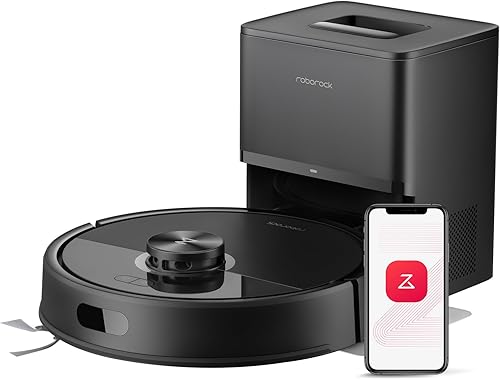
Roborock Q7 M5+: Best for homes with heavy shedding
- 10,000 Pa suction
- Dual anti-tangle brush design
- Self-empty dock with 2.7 L bag
- LiDAR mapping
Anti-tangle brushes and a bagged dock suit homes where loose fur builds up between cleanings. Choose it for frequent vacuuming with hard-floor wiping as a useful extra.
Pros
- Main and side brushes designed to resist hair wrap
- Scheduled cleaning and spot cleaning
- App-set no-go zones around pet areas
Cons
- Mop pad needs manual care
- Confirm a rug-protection routine before mopping mixed floors
Buy the Q7 M5+ if loose fur is the main daily mess and you want mopping as an extra. Its 10,000 Pa suction works alongside a JawScrapers main brush and an anti-tangle side brush, giving hair care attention at both brush positions.
The RockDock Plus collects debris in a 2.7 L sealed bag. Roborock claims up to 7–9 weeks between bag changes, but a heavy-shedding household should check the bag earlier rather than follow the calendar alone.
PreciSense LiDAR mapping, schedules and no-go zones support a repeatable cleaning route. Use those controls to focus regular runs on open floors where fur gathers, while keeping feeding mats and pet resting areas out of the path.
Its mop offers 3 water-flow settings for hard-floor wiping. Skip it if automatic pad washing is essential, or if your mixed-floor routine depends on a confirmed automatic mop lift.
For a home with mostly exposed hard floors, the buying case is clear: prioritize regular hair pickup, then handle the pad after each wet run.
Keeping scattered rugs out of wet runs: Roomba 105 Combo
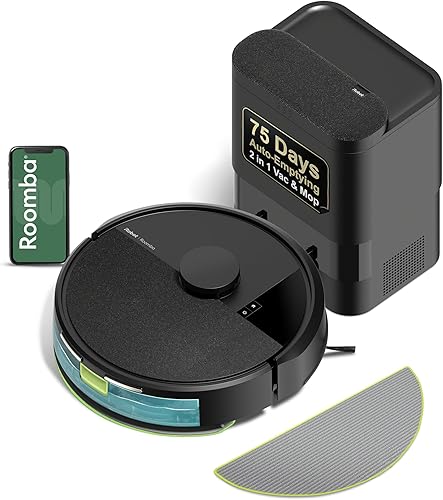
Roomba 105 Combo: Best for hard floors dotted with rugs
- Avoids carpet while mopping
- Bagged AutoEmpty dock
- LiDAR mapping
- Vacuum, mop or combo modes
Automatic carpet avoidance during mopping suits homes with hard floors and scattered rugs. Separate cleaning modes let you plan carpet vacuuming and hard-floor mopping around your routine.
Pros
- Automatically avoids carpets while mopping
- Adjustable cleaning passes and liquid flow
- App, button and voice controls
Cons
- Dock needs replacement bags
- Carpet avoidance changes where a mopping run can reach
Choose the Roomba 105 Combo if hard floors and scattered rugs share the same rooms. It detects and avoids carpet while mopping, so you can plan a wet run around the hard-floor areas without drawing every rug boundary yourself.
That behavior also creates a routing trade-off. A rug across a doorway may separate two hard-floor spaces, so watch the first mopping route and confirm that the robot reaches the areas you want cleaned.
Vacuum-only, mop-only and combo modes let you separate tasks. Room targeting, adjustable passes and liquid-flow control are useful when the entry needs attention more often than a quiet bedroom.
The AutoEmpty dock uses bags, and iRobot claims up to 75 days of debris storage. The box also includes an extra mop pad, which helps when one pad is being washed.
Skip it if your goal is to vacuum rugs during the same wet run or if brush detangling drives your whole decision. Its strongest reason to buy is carpet avoidance, rather than a dedicated anti-tangle brush system.
Crossing between hard floors and low rugs: Roborock Q10 S5+
Roborock Q10 S5+: Best for mixed floors with low-pile rugs
- 10,000 Pa suction
- Dual anti-tangle system
- Mop lifts up to 8 mm
- Structured-light obstacle avoidance
Mop lifting, sonic scrubbing and anti-tangle brushes suit mixed-floor homes that need regular vacuuming and mopping. Check rug clearance before relying on a raised pad to keep carpet dry.
Pros
- Carpet detection with automatic suction increase
- Structured-light obstacle avoidance
- Multi-level mapping
Cons
- Mop lift may not clear tall or plush rugs
- Pads still need manual care
Pick the Q10 S5+ if your route crosses between hard floors and low-pile rugs and you want active scrubbing. Its VibraRise 2.0 system uses sonic vibration, and the mop lifts up to 8 mm when carpet is detected.
That lift needs enough clearance above your particular rug. Skip it for a lift-dependent routine over plush pile, where fibers may still touch the raised pad, and use a dry-only approach for those areas.
The robot combines 10,000 Pa suction with dual anti-tangle brushes and automatic carpet suction adjustment. Structured-light obstacle avoidance adds another tool for handling items in its path, though cords and small pet toys should still be cleared before a run.
Its LiDAR system supports multi-level maps, which helps when you carry the robot between floors. Each level still needs preparation and a suitable cleaning plan.
The bagged dock holds 2.7 L, with Roborock claiming up to 70 days of debris storage. Choose this model for its floor transitions and scrubbing features; choose the Plus 405 if washing pads is the task you most want to hand over.
Scheduling different rooms for different jobs: Roomba 104 2-in-1
Roomba 104 2-in-1: Best for room-by-room cleaning routines
- Avoids carpet while mopping
- Bagged AutoEmpty dock
- LiDAR mapping
- Room targeting and keep-out zones
Room targeting and separate cleaning modes suit buyers who want a planned routine for specific spaces. Its carpet avoidance helps separate hard-floor mopping from rug vacuuming.
Pros
- Vacuum-only, mop-only and combo modes
- Room targeting and keep-out zones
- Adjustable liquid flow and cleaning passes
Cons
- Dock needs replacement bags
- Shares many core features with the Roomba 105 Combo
The Roomba 104 2-in-1 suits buyers who want a room-by-room routine with separate wet and dry jobs. You can vacuum one area, mop another and use keep-out zones around spaces that should stay untouched.
It shares several core features with the 105 Combo, including LiDAR mapping, carpet avoidance during mopping and a bagged AutoEmpty dock. There is no reason to treat those shared features as an upgrade unique to the 104.
Its stated battery life is 120 minutes, compared with 100 minutes for the 105 Combo. Use that as a planning detail, since stronger suction, extra passes and room layout can change how much floor a run covers.
A micro-pump controls liquid delivery to the microfiber pad, and SmartScrub adds a scrubbing option. This suits a household that wants to schedule attention to the kitchen or entry rather than run every room the same way.
Skip it if you already prefer the 105's shared feature set, or if you need automatic pad washing. If hair wrap is your main worry, read the guide to stopping pet hair tangles before choosing a brush design.
Reducing pad chores after frequent mopping: Roomba Plus 405
Roomba Plus 405: Best for frequent hard-floor mopping

- AutoWash dock washes and dries pads
- Spinning DualClean mop pads
- Automatic mop-pad lifting
- Vacuum-first cleaning option
Automatic pad washing and drying make this the pick for buyers who expect to mop often. The dock reduces pad chores, while the vacuum-first option separates dry pickup from wet cleaning.
Pros
- Rinses pads during cleaning
- Washes and dries pads after cleaning
- Clean Zones and Keep Out Zones
Cons
- Dock needs accessible floor space
- Water and dock care remain part of upkeep
Choose the Roomba Plus 405 if you expect to mop often and dislike washing pads. Its AutoWash dock rinses the spinning DualClean pads during cleaning, then washes and dries them after the run.
The vacuum-first-then-mop option is useful in pet homes. Removing dry fur before wet cleaning helps keep loose hair from collecting on a damp pad, especially around beds and favorite resting spots.
The pads lift when carpet is sensed, and Clean Zones let you target areas that need more attention. Check rug clearance during setup rather than assuming every carpet will stay clear of the pads.
iRobot claims up to 75 days of auto-emptying and 4 weeks of mopping and pad washing, with the latter based on 1 mopping run per week. More frequent mopping changes how quickly water and other supplies need attention.
Skip it if you rarely mop, have little accessible dock space or would rather wash a simple pad yourself. Its main benefit is moving pad care to the dock, which still needs water handling and cleaning.
Taking care of bin emptying yourself: Roborock Q7 L5
Roborock Q7 L5: Best for emptying the bin yourself

- 8,000 Pa suction
- Dual anti-tangle brushes
- LiDAR mapping with multiple floor maps
- 270 ml water tank
Anti-tangle brushes without a self-empty station suit buyers who will handle bin emptying themselves. Its integrated dustbin and water tank make the care routine worth considering before buying.
Pros
- Main and side brushes designed to resist hair wrap
- Saves multiple floor maps
- Room schedules and no-go zones
Cons
- Bin needs manual emptying
- Water tank and dustbin form one integrated part
Buy the Q7 L5 if you will empty the bin yourself and want anti-tangle brushes with mapped cleaning. It provides 8,000 Pa suction and main and side brushes designed to reduce hair wrap, without a self-empty station.
Manual emptying makes the most sense when it fits an existing habit. Checking the robot after an evening run is manageable; expecting it to collect several days of heavy shedding without attention is a poor match.
The 270 ml water tank and dustbin form one integrated part. Follow the care instructions closely so that handling the water section does not expose parts that must stay dry.
Its removable pad and 3 water levels support basic wet cleaning. Multi-level maps, room schedules and no-go zones give you control over where and when it runs.
Skip it if you often forget bin care or need automatic emptying while away. For buyers who already plan to check the robot after every run, its charging-only dock avoids adding a larger debris-storage station to the routine.
Avoiding disposable dock bags: Shark AV2610WA
Shark AV2610WA: Best for households avoiding disposable dock bags

- Bagless self-empty base
- Self-cleaning brushroll
- Sonic mopping
- LiDAR mapping
A bagless base and hair-wrap-resistant brushroll suit households that want automatic bin emptying without replacement dock bags. Plan for manual base emptying and a separate approach to protecting rugs during mopping.
Pros
- No replacement dock bags needed
- Base has sealed HEPA filtration
- Recharge and Resume
Cons
- Base must be opened to dispose of debris
- Confirm rug protection before starting a wet run
Choose the Shark AV2610WA if you want self-emptying without replacement dock bags. Its bagless base holds up to 60 days of debris according to Shark, and the self-cleaning brushroll is designed to reduce hair wrap.
The trade-off comes when you empty the base. You open the container and dispose of the collected debris yourself, so choose a bagged option if sealing fur inside a disposable bag is more convenient for your household.
The base has sealed HEPA filtration that captures 99.97% of dust and allergens down to 0.3 microns. That describes particle capture at the base, rather than a promise about the air throughout your home.
Matrix Clean uses repeated grid passes, while sonic mopping scrubs hard floors. Recharge and Resume lets the robot return to cleaning after charging, which helps when a route needs more time.
Skip it if automatic mop lifting or carpet avoidance is a requirement until you have confirmed a suitable rug-protection routine. It is the clearest fit here for buyers whose dock choice centers on bagless debris storage.
How should your floors and pet hair change the choice?
Choose around your hardest recurring chore, then check whether the robot can follow a useful route through your home. Long hair, rug placement and pad care often separate these picks more clearly than suction figures.
Start with where the hair collects
For long strands, brush access matters alongside anti-tangle features. You should be able to reach roller ends and side-brush posts without turning a quick cleanup into a task you keep putting off.
Short fur presents a different problem: it can collect in rugs, corners and fabric-covered furniture. A floor robot covers only part of that workload, so keep a separate tool for stairs, upholstery and stubborn carpet patches.
If hair gathers under furniture, measure the lowest opening and check the robot's own height. Leave room for uneven floors and trim rather than choosing a machine that only barely fits on paper.
Decide whether rugs should be crossed or avoided
Carpet avoidance and mop lifting solve different routing problems. Avoidance keeps the wet robot off the rug, while lifting aims to let it cross with the pad raised.
A low rug in an open room may suit a lifting design. A delicate rug that must stay completely outside wet cleaning calls for a more conservative route, regardless of the robot's lift feature.
Fringe and loose rug edges also deserve attention because they can catch in brushes or shift under a wheel. For deeper pile, use our guide to robot vacuums for thick carpet and rugs before choosing.
Treat suction as one part of hair pickup
Suction helps move debris, but brush contact and a clear airflow path are also essential. A clogged filter or a roller packed with strands can undermine a machine with a high suction figure.
The Roomba suction comparisons here are against Roomba 600 series robots, not against the Roborock models. Don't turn those claims into a cross-brand ranking; our guide to what robot vacuum Pa means explains the distinction.
Match mopping to your actual floors
A combo earns its place when you have enough mop-safe hard flooring to use it regularly. Check your floor maker's care instructions, especially for wood, seams and surfaces sensitive to moisture.
A damp pad helps with fine dust and routine paw marks. It does not make a robot suitable for puddles, pet waste or every dried-on mess, and heavily soiled areas may still need manual cleaning.
Which dock chores will you still need to do?
A self-empty dock handles dry debris, while a pad-washing dock adds wet-cleaning care. Choose based on which chores interrupt your routine, rather than the longest advertised storage interval.
Bagged docks let you remove collected fur inside a bag, but they require replacements. Bagless storage avoids that supply, while leaving you responsible for opening and emptying the container.
With heavy shedding, inspect storage more often at first. Compressed fur can fill space or obstruct debris transfer before an advertised maximum interval has passed.
Pad automation creates a different routine involving clean water, dirty water and the washing area. A dock that washes pads still needs an accessible position where you can remove tanks and clean its parts.
Our guide to self-empty stations explains the dry-debris side of the decision. Keep that separate from pad washing when comparing dock features.
How should you set up a combo robot in a pet home?
Start with a clear floor and a supervised first run so you can fix routing problems before scheduling regular cleaning. Set up the home as it will normally look, including the rugs and furniture the robot must work around.
Place the dock where it can stay
Follow the dock's clearance instructions and keep its approach free of bowls, shoes and trailing cables. Leave enough access to remove bags, bins or water tanks without moving the whole station.
Avoid placing it beside a water bowl or where a damp pad will rest on a moisture-sensitive surface. Use the supplied moisture-protection mat where the instructions call for it.
Prepare the route and cleaning map
Pick up cords, socks, chew toys and loose fabric before mapping. Obstacle features do not remove the need to clear items that can wrap around a brush.
Mark feeding areas and other problem spots with no-go or keep-out zones where available. Then check the route at doorways, rug edges and furniture bases to find places that need a boundary or a small layout change.
Connect the network before building schedules
The Roborock models here and the Roomba 104 and 105 use 2.4 GHz Wi-Fi. Confirm that band is available before setup; a phone connected only to a different band can complicate pairing.
Begin with a schedule you can observe. Once the route works, choose a time when floors are clear and your pet is comfortable with both the robot and the dock's emptying cycle.
Introduce wet cleaning after the dry route works
Run dry pickup first if the floor has a large buildup of fur. Start mopping with a clean pad and the lowest suitable water setting, then check for streaks, damp rug edges or missed rooms.
Use only cleaning liquid approved for the exact model, and follow the mixing instructions. Household soap can create foam or leave residue, so don't substitute it for an approved solution.
How do you keep hair pickup and mopping useful?
Keep brushes clear, filters cared for and pads clean rather than waiting for a visible drop in performance. The first few runs will show how quickly your home's hair load builds up.
After early runs, inspect the roller ends, side brush, wheels and bin opening. Once you know where fur collects, set a routine that catches buildup before it becomes a blockage.
Check the debris path if the robot returns from a run with a full bin despite using a self-empty dock. An obstructed opening needs attention even when the dock's storage bag has room left.
Clean filters according to the model's instructions. Wash only parts approved for washing, and let washable parts dry fully before reinstalling them.
For manual pads, remove and clean the pad after wet use, then let it dry. Leaving a dirty damp pad attached makes the next run start with yesterday's grime.
Inspect an automatic washing dock's tray and accessible wet parts too. Automatic pad care reduces chores, but trapped hair and residue still need removal.
Use our robot vacuum cleaning guide for a fuller care routine. Keep suitable spare pads, filters and bags available so one worn or dirty part does not stop regular cleaning.
What mistakes make a pet-hair combo less useful?
The biggest mistakes are running over unsuitable messes and leaving too much time between cleanings. A robot works best as routine floor care with a prepared path.
- Sending it over pet accidents: Remove waste, vomit and puddles yourself before a run, regardless of obstacle features.
- Waiting for thick piles of fur: Schedule smaller, regular pickups so hair has less time to collect in corners or work into rugs.
- Mopping with a loaded pad: Clean or change the pad when it is dirty instead of sending it through more rooms.
- Assuming every rug clears a raised mop: Check the underside of the pad and rug edges during the first wet route.
- Choosing a dock with no service space: Allow room to open lids, lift tanks and remove debris containers.
- Expecting the robot to replace every cleaning tool: Keep a vacuum available for stairs, furniture and spots the robot cannot reach.
If a schedule causes repeated rescues, fix the route before adding more runs. One reliable kitchen-and-hallway job is more useful than a whole-home routine that stops under the same chair each day.
Which is the best robot vacuum and mop for your pet home?
Choose the best robot vacuum and mop for pet hair by the chore you want to reduce most. Then rule out any model whose rug behavior or care routine does not fit your home.
- Pick Roborock Q7 M5+ for frequent shedding cleanup with anti-tangle brushes and bagged self-emptying.
- Pick Roomba 105 Combo when keeping rugs outside the wet route is the priority.
- Pick Roborock Q10 S5+ for sonic scrubbing and transitions over rugs that clear its raised mop.
- Pick Roomba 104 2-in-1 for a planned room-by-room routine with separate cleaning modes.
- Pick Roomba Plus 405 when frequent mopping makes pad washing the chore you most want to reduce.
- Pick Roborock Q7 L5 if manual bin emptying fits your daily habits.
- Pick Shark AV2610WA if avoiding disposable dock bags matters most.
Before ordering, confirm your rug plan, dock location and willingness to handle wet parts. If those checks leave you unsure about adding a mop, read which robot setup fits a pet home to decide whether a combo will earn its upkeep.
Our top 3 picks at a glance
-
1
-
2
-
3
Frequently asked questions
What matters most in a robot vacuum and mop for pet hair?
Brush care and floor handling matter most, followed by how much dock upkeep you will accept. Choose a brush designed to reduce hair wrap, check how wet pads stay off rugs, and decide who will empty debris and wash pads.
A self-empty dock handles only part of that routine.
Can a robot vacuum and mop clean pet hair on carpet?
Yes, combo robots can vacuum pet hair on carpet, but the mop does not help remove embedded fur. Brush contact, rug pile and regular cleaning all affect the result.
Keep wet pads clear of carpet and use our guide to robot vacuums on carpet to assess your floors.
Do robot mop combos prevent pet hair from tangling?
Anti-tangle designs reduce brush work rather than remove it entirely. Hair can still collect at roller ends, around side-brush posts and near wheels.
Check those areas after the first few runs, then set a care schedule based on what collects. Long human hair deserves the same attention as pet fur.
Should you choose a combo robot or a vacuum-only model for pet hair?
Choose a combo when you have hard floors you want mopped regularly. If carpet covers most rooms, or you prefer to mop by hand, focus on vacuuming features instead.
Our vacuum and mop versus vacuum-only comparison explains how floor coverage and pad care change the decision.