7 Best Self-Emptying Robot Vacuums for Pet Hair (October 2026)
The best self-emptying robot vacuums for pet hair include the Roborock Q7 M5+ for homes with long-haired pets, the Roomba 105 Combo for hard floors with area rugs, and the Roomba 105 Vac for households that mop separately.
On this page (8 sections)
- The 7 best self-emptying robot vacuums for pet hair
- How we chose these self-emptying vacuums for pet hair
- Which self-emptying robot vacuum fits your pet home?
- What should you check before choosing a self-emptying pet vacuum?
- How should you set up a robot vacuum in a pet home?
- What care does a self-emptying robot still need?
- Which mistakes cause the most trouble in pet homes?
- Which self-emptying robot vacuum for pet hair should you choose?
The Roborock Q7 M5+ is the best self-emptying robot vacuum for pet hair in this group because its anti-tangle design addresses fur on both the main and side brushes. Choose it for long-haired pets, the Roomba 105 Combo for hard floors with rugs, or the Shark AV2501AE for longer gaps between bagless emptying chores.
Start with your biggest daily problem: wrapped hair, a full dustbin or dirty hard floors. Our complete guide to robot vacuums for pet hair explains the broader choices if you haven't settled on a self-emptying model.
Our picks at a glance
-
1
-
2
-
3
The 7 best self-emptying robot vacuums for pet hair
The Roborock Q7 M5+ ranks first for its brush design, followed by the Roomba 105 Combo and Roomba 105 Vac. The table helps you narrow the group by disposal method, floor care and brush features.
A lower-ranked model can still fit your home better. A household that refuses replacement bags has a different shortlist from one that wants the most contained way to throw away collected fur.
| Product | Best for | Dock capacity | Brush design | Mopping | Our score |
|---|---|---|---|---|---|
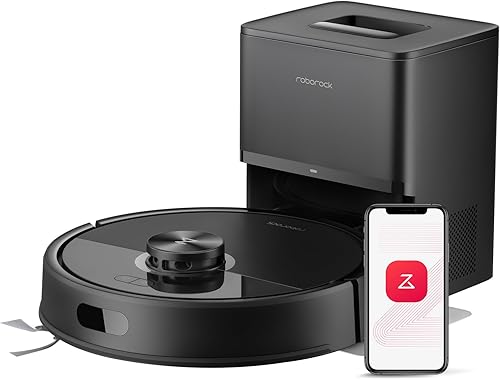
| Roborock Q7 M5+ | homes with long-haired pets | 2.7 L sealed dust bag | Dual anti-tangle main and side brushes | Vacuum and mop with 3 water flow settings | 9.0 |
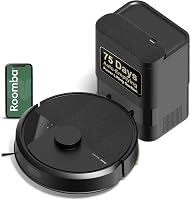
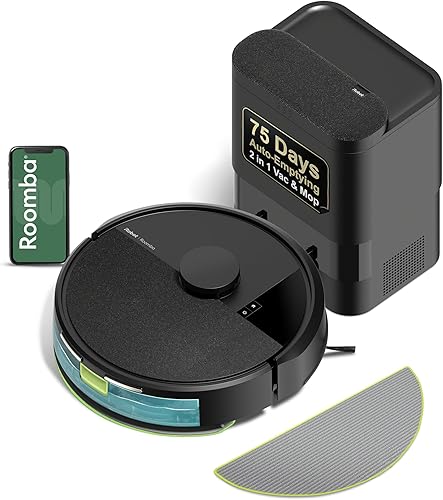
| Roomba 105 Combo | hard floors with area rugs | Up to 75 days, iRobot says | 8.8 | ||
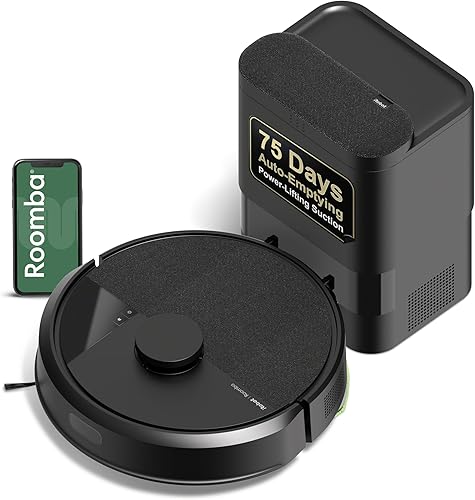
| Roomba 105 Vac | households that mop separately | Up to 75 days, iRobot says | 8.2 | ||
| Shark AV2501S | bagless filtered storage | Up to 30 days, Shark says | Self-cleaning brushroll | 8.0 | |
| Shark AV2501AE | fewer bagless emptying chores | Up to 60 days, Shark says | Self-cleaning brushroll | 7.8 | |
| Shark AV2820S | homes with floor transitions | 7.6 | |||
| Shark AV2110S | daily pet-zone cleaning | Up to 30 days, Shark says | Self-cleaning anti-hair wrap brushroll | 7.4 |
How we chose these self-emptying vacuums for pet hair
We compared brush design, debris storage, navigation and cleaning modes, giving priority to features that reduce recurring pet-hair chores. The scores reflect those features and their fit for this search.
The dock solves frequent bin emptying, but brush care remains a separate job. A model that reduces hair wrap can be more useful than extra storage if you keep stopping a robot to free its roller.
Advertised storage intervals also need context. Several shedding animals, larger floor areas and frequent runs can fill a base sooner, so use those intervals to compare options rather than set a disposal deadline.
For a closer look at the parts that collect wrapped fur, see how to stop pet hair tangling in a robot vacuum brush.
Which self-emptying robot vacuum fits your pet home?
Choose the problem you want to solve first, then use each product's tradeoffs to narrow your choice. These picks stay in score order, with a clear buyer and skip reason for each.
Roborock Q7 M5+: Best for homes with long-haired pets
- Dual anti-tangle main and side brushes
- 2.7 L sealed dust bag
- Up to 7–9 weeks between bag changes, Roborock says
- 10,000 Pa suction
Anti-tangle features on both brushes make this the strongest fit for long-haired pets. A sealed dock bag contains collected fur for disposal.
Pros
- Anti-tangle main and side brush design
- Sealed dust bag for contained disposal
- LiDAR mapping and app-set no-go zones
Cons
- The app supports 2.4 GHz Wi-Fi only
- Mopping adds pad and water-system care
Choose the Roborock Q7 M5+ if long strands from pets and people make brush cleaning your main chore. Roborock says its JawScrapers main brush and anti-tangle side brush resist hair wrap, including fur from long-haired breeds.
The RockDock Plus collects debris in a 2.7 L sealed bag, with up to 7–9 weeks between bag changes, according to Roborock. That suits buyers who prefer removing a contained bag to tipping loose fur into the trash.
It has 10,000 Pa suction, PreciSense LiDAR mapping and app controls for schedules, spot cleaning and no-go zones. Keep food bowls and loose bedding outside the cleaning route so the robot can reach the surrounding floor.
The mop module adds hard-floor wiping with 3 water-flow settings. Skip this pick if you want bagless disposal, and favor a vacuum-only model if you want to avoid mop care altogether.
The app supports 2.4 GHz Wi-Fi only. Check that your network offers that band before planning app-based cleaning.
Roomba 105 Combo: Best for hard floors with area rugs
- Up to 75 days of debris capacity, iRobot says
- Vacuum, mop or combo modes
- Detects and avoids carpet while mopping
- ClearView LiDAR
Choose this Combo for dry pickup and routine hard-floor wiping around rugs. It automatically detects and avoids carpet during mopping.
Pros
- Separate vacuum, mop and combined modes
- Automatic carpet avoidance during mopping
- Adjustable suction, passes and liquid flow
Cons
- AutoEmpty dock needs replacement bags
- Mop pad and water system need care
Choose the Roomba 105 Combo if your floors collect both loose fur and everyday hard-floor marks. Its separate vacuum, mop and combined modes let you match the run to the job rather than wet-clean every time.
Its most useful distinction for mixed floors is automatic carpet avoidance while mopping. That makes it a clear fit for hard-floor rooms with area rugs, where a wet pad needs a different route from dry vacuuming.
You can target rooms and adjust cleaning passes, suction and liquid flow. Use those controls to give a busy entryway extra attention without applying the same routine throughout the home.
The washable microfiber pad still needs cleaning after use, and any cleaning solution must be compatible with the robot. The AutoEmpty dock uses bags and holds up to 75 days of debris, according to iRobot.
Skip the Combo if carpet dominates your home or you already prefer a separate mop. Our Roomba 105 Vac overview covers the simpler dry-cleaning alternative.
Roomba 105 Vac: Best for households that mop separately
- Up to 75 days of debris capacity, iRobot says
- Vacuum-only design
- ClearView LiDAR
- App, button and voice control
The vacuum-only Roomba suits households that already have a mopping routine. Room targeting and spot cleaning help focus pickup where pets spend time.
Pros
- No mop system to maintain
- Room targeting and keep-out zones
- App, button and voice control
Cons
- AutoEmpty dock needs replacement bags
- No mopping option
Choose the Roomba 105 Vac if you want a robot to manage dry floor debris while you handle mopping separately. It combines a multi-surface brush, an edge-sweeping brush and ClearView LiDAR without adding water-system chores.
The app supports room targeting, schedules, keep-out zones and changes to suction and cleaning passes. A spot-clean mode works one area repeatedly for up to 5 minutes, useful for a fur patch beside a pet bed.
Its AutoEmpty dock uses replacement bags and holds up to 75 days of debris, according to iRobot. App, button and voice controls give you several ways to start a run.
This model fits a simple dry-cleaning routine, especially when room-by-room scheduling matters more than mopping. Skip it if your first priority is an explicitly anti-tangle brush design, or if you want one robot for wet and dry chores.
For carpeted rooms, also read how to choose a robot vacuum for carpet. Rug construction and access matter alongside the robot's controls.
Shark AV2501S: Best for bagless filtered storage
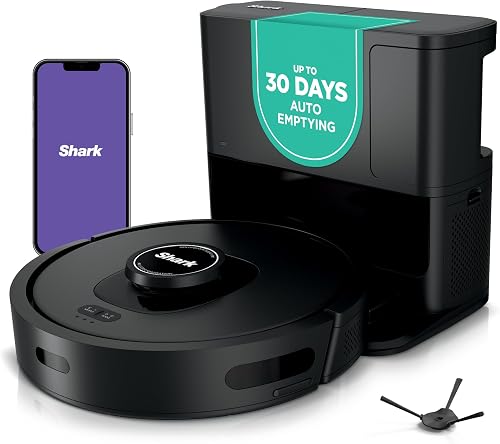
- Bagless base holds up to 30 days, Shark says
- HEPA filtration in the base
- Self-cleaning brushroll
- Matrix Clean navigation
This Shark combines bagless debris storage with HEPA filtration in the base. Its self-cleaning brushroll and mapped grid coverage suit regular dry pickup.
Pros
- HEPA filtration in the base
- Self-cleaning brushroll
- Recharge and Resume
Cons
- Shorter advertised dock interval than the AV2501AE
- Bagless disposal requires opening the debris container
Choose the Shark AV2501S if you want bagless storage with HEPA filtration in the base. Shark says the base captures 99.97% of dust and allergens down to 0.3 microns and holds up to 30 days of debris.
The filtration describes debris capture inside the system. Disposal still means opening a container, so a bagged model may suit you better if handling loose collected dust is your main concern.
Its self-cleaning brushroll addresses hair buildup, while Matrix Clean uses a grid with multiple passes. That combination suits regular dry pickup in rooms where fur spreads beyond a single pet resting spot.
The robot uses 360° LiDAR mapping, offers up to 120 minutes of runtime and supports Recharge and Resume. Schedule it when the floor is available, leaving time for a charging break on a longer job.
Skip this model if longer gaps between base emptying matter most. For help comparing suction claims, read what robot vacuum suction power in Pa means.
Shark AV2501AE: Best for fewer bagless emptying chores

- Bagless HEPA self-empty base
- Up to 60 days of capacity, Shark says
- Matrix Clean grid navigation
- Self-cleaning brushroll
Choose this Shark when longer gaps between bagless emptying chores matter most. Its base has the longest advertised storage interval among the Shark models here.
Pros
- No replacement dust bags
- HEPA filtration in the base
- Multiple cleaning passes with Matrix Clean
Cons
- Vacuum-only cleaning
- Stored debris still needs manual disposal
Choose the Shark AV2501AE if you want bagless disposal with fewer base-emptying chores. Shark gives its base up to 60 days of debris capacity, the longest advertised interval among the Shark models here.
That makes it worth considering for buyers who dislike replacement bags but also want to limit trips to the trash. Heavy shedding can shorten the interval, so inspect the container rather than waiting for a calendar date.
Its self-cleaning brushroll handles dry pickup, and Matrix Clean follows a grid with multiple passes. The base has HEPA filtration, and 360° LiDAR maps the cleaning route.
Up to 120 minutes of runtime and Recharge and Resume support longer cleaning jobs. Alexa and Google Assistant control let you start cleaning by voice as well as set a schedule.
Skip it if you want mopping or contained bag disposal. Choose it over the AV2501S for its storage interval, rather than assuming the larger-capacity base means stronger floor cleaning.
Shark AV2820S: Best for homes with floor transitions

- DirtDetect boosts suction for hidden debris
- FloorDetect adjusts brushroll engagement
- EdgeDetect directs debris from corners
- NeverStuck lifts and lowers over obstacles
This model suits homes where floor transitions and changing surfaces shape the cleaning route. Its detection features respond to debris, floor type and edges.
Pros
- Automatic suction response to hidden debris
- Brushroll adjustment for different surfaces
- Lift-and-lower movement designed for thresholds
Cons
- Shorter advertised dock interval than the AV2501AE
- Vacuum-only cleaning
Choose the Shark AV2820S if floor transitions and uneven cleaning needs are your main concerns. It suits a layout where the route crosses thresholds and moves between hard floors and carpet.
DirtDetect responds to hidden debris by increasing suction and cleaning passes. FloorDetect adjusts brushroll engagement for the surface, while EdgeDetect uses air blasts to move debris from edges and corners into the cleaning path.
NeverStuck technology lifts and lowers the robot to help it cross obstacles. Check your actual thresholds before buying, because that feature does not establish a crossing height for every doorway or rug.
The model also has 360° LiDAR, 3D object detection and a bagless 30-day HEPA self-empty base. Those features focus on the cleaning route and how the robot responds along it.
Skip this model if your floors are straightforward and your main goal is a longer storage interval. If wrapped fur causes most of your interruptions, give brush design priority over movement features.
Shark AV2110S: Best for daily pet-zone cleaning
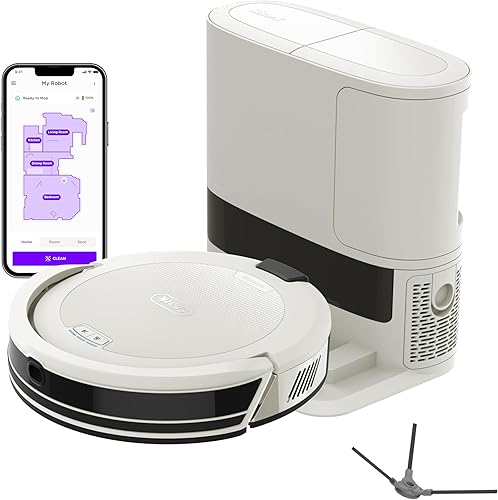
- Bagless base holds up to 30 days, Shark says
- SmartPath LiDAR row-by-row cleaning
- Anti-hair wrap brushroll
- Recharge and Resume
The Navigator suits a routine built around daily dry pickup and mapped pet zones. It combines an anti-hair wrap brushroll with app schedules and no-go zones.
Pros
- Self-cleaning anti-hair wrap brushroll
- App targeting and no-go zones
- Recharge and Resume
Cons
- Shorter advertised dock interval than the larger-capacity options
- Vacuum-only cleaning
Choose the Shark AV2110S for scheduled dry pickup around pet areas. Its SmartPath LiDAR maps the home for row-by-row cleaning, and the app lets you target spots, create schedules and set no-go zones.
The self-cleaning anti-hair wrap brushroll makes it relevant to households collecting both pet fur and long human hair. Keep checking the roller ends, wheels and side brush, since a brush feature does not remove every place strands can gather.
Shark says the bagless base holds up to 30 days of debris. Recharge and Resume lets the robot return to its dock, charge and continue when the battery runs low.
This is a sensible match for a routine built around accessible floors, regular pickup and pet-zone boundaries. Skip it if you want mopping or the longest gap between base-emptying chores.
If you are still weighing self-emptying models against other designs, our broader guide to robot vacuums for pet hair compares more brush and floor-care options.
What should you check before choosing a self-emptying pet vacuum?
Match fur type, floor access and disposal preferences before comparing extra features. A robot needs to reach the mess, collect it and transfer it into a base you can comfortably maintain.
Choosing the best self-emptying robot vacuum for long pet hair
Put brush design first when long strands wrap around your current vacuum. Look at the main roller and side brush separately, since either can become a stopping point for a cleaning run.
For short-haired pets, loose fur may spread widely without forming the same long tangles. In that situation, frequent mapped coverage and enough debris storage may matter more than choosing around coat length alone.
Keep the first few brush inspections close together. The amount of hair you find will tell you more about your care schedule than a fixed weekly reminder.
Match the robot to carpet, rugs and furniture
Check where the robot can physically clean, including under low furniture and between chair legs. Measure the tight spots and compare them with the robot's own dimensions, keeping dock measurements separate.
Loose rug fringe, curled corners and thick transitions can interrupt a route. A movement feature helps address some obstacles, but it is still worth removing or securing avoidable traps.
Carpet also needs more than a high suction number. Brush contact, repeated coverage and the ability to cross onto the rug all affect how useful the robot will be in that room.
Keep a conventional vacuum for stairs, upholstery and deeper carpet care. A floor robot cannot collect the fur on your sofa or reach every narrow edge.
Choose how you want to dispose of collected fur
Pick bagged storage for contained removal or bagless storage to avoid buying dust bags. Neither choice eliminates upkeep, but each gives you a different disposal chore.
A bagless container needs room to be lifted out and emptied. Consider where you will do that, especially if the dock would sit far from your trash area.
Storage days are not a direct measure of cleaning ability. A longer interval helps with convenience, while brush design and floor access address pickup.
Decide whether mopping will save you work
Choose a combo when hard-floor wiping is a chore you will actually use it for. If most reachable floors are carpet, paying attention to vacuum features makes more sense.
Plan the wet-cleaning route around rugs and your floor's care instructions. Automatic carpet avoidance, as on the Roomba 105 Combo, differs from choosing a water-flow setting.
If mop care would discourage regular use, choose a dry-only model. Our guide to robot vacuums without a mop narrows that choice.
How should you set up a robot vacuum in a pet home?
Start with a clear dock location and a supervised first run. Good setup helps you find trouble spots before you rely on a schedule.
Give the dock a stable home
Place the base on a level surface near an outlet, using the clearance required in the model's instructions. Leave enough room to remove its bag or debris container without dragging the dock out.
Avoid a spot where a pet bed, door or movable chair will block the approach. Keeping the base in one place also avoids adding an unnecessary change after mapping.
Prepare the route before mapping
Pick up cords, socks, small toys and loose fabric that could reach a moving brush. Open the doors to rooms you want included, and keep the furniture arrangement close to its usual layout.
Then check the map and use the model's available boundaries around problem areas. Food stations, loose mats and corners full of toys are useful places to review first.
Watch how the robot crosses each rug and threshold. If it struggles repeatedly, change the route or block that area instead of letting every scheduled run end at the same obstacle.
Build the schedule around your pets
Begin with the rooms that collect the most fur, rather than scheduling the whole house by default. Frequent pickup in pet resting areas can keep loose hair from spreading into nearby rooms.
Introduce the robot while you are home and give pets a quiet place to retreat. Schedule routine runs for a time when bowls, bedding and floor clutter are easy to manage.
For the Roborock and both Roomba models here, plan around a 2.4 GHz network for app setup. Follow each model's connection steps before building your schedule.
What care does a self-emptying robot still need?
Inspect brushes, filters, wheels and the debris-transfer path regularly. The dock moves dirt out of the robot's bin, but it does not clean those parts for you.
Check that debris reaches the base
After early cleaning runs, inspect the robot bin and the base. Hair left packed in the bin can point to a blocked opening, a full storage container or a part that needs reseating.
Turn the robot off before clearing a blockage, and follow its instructions for opening the transfer path. Avoid pushing debris farther into an opening with a sharp tool.
Check storage more often during a heavy shedding period. An advertised multiweek interval should never take priority over a visibly full bag or container.
Remove hair from the places brushes cannot clear
Look at roller ends, axles, side brushes and wheels as well as the main cleaning surface. Strands wound around an axle can restrict movement even when the brush itself looks clear.
Follow the care instructions for filters and sensors. Only wash parts identified as washable, and let them dry fully before putting them back.
Our guide to how to clean a robot vacuum explains the main care tasks. Use your model's instructions for removal steps and replacement intervals.
Keep mop care separate from dust care
Clean a used mop pad promptly instead of leaving a dirty, damp pad ready for the next run. Follow the instructions for water storage and use only an approved solution if the model allows one.
Vacuum loose fur before asking a pad to wipe the floor. Mopping is for routine surface cleaning, not a substitute for collecting piles of hair or handling pet accidents.
Which mistakes cause the most trouble in pet homes?
Avoid unsafe floor messes, blocked routes and neglected airflow. These mistakes can turn a useful cleaning schedule into repeated interruptions.
- Trusting object detection with pet waste. General obstacle sensing does not establish reliable pet-waste recognition. Check the floor before a scheduled run when accidents are possible.
- Leaving wet spills for a vacuum run. Keep liquids out of dry vacuum paths and clean pet accidents separately.
- Waiting for the advertised storage deadline. Inspect the base and react to the actual debris level.
- Using extra passes to compensate for dirty parts. Check the brush, bin and filter before increasing the cleaning workload.
- Moving the dock whenever it is inconvenient. Choose an accessible permanent position during setup.
- Assuming self-cleaning means care-free. Brush ends, wheels and filters still need attention.
For accident-prone pets, read what to know about robot vacuums and pet accidents before leaving a robot to clean unattended.
Which self-emptying robot vacuum for pet hair should you choose?
The best self-emptying robot vacuum for pet hair is the one that removes your main recurring chore. Choose the Roborock Q7 M5+ for long fur and hair-wrap concerns, or the Roomba 105 Combo when hard-floor wiping around rugs would save you work.
Choose the Roomba 105 Vac if you mop separately and prefer bagged disposal. Among the Sharks, favor the AV2501AE for longer bagless storage, the AV2501S for filtered bagless storage, the AV2820S for floor transitions, or the AV2110S for daily mapped dry pickup.
Before ordering, settle 3 details: where the dock will live, how you want to dispose of fur and which floors the robot must reach. Those choices make the shortlist much clearer than storage-day claims alone.
For the wider buying picture, return to our robot vacuum guide for pet hair. To plan the remaining dock chores, see what a self-empty station is.
Our top 3 picks at a glance
-
1
-
2
-
3
Frequently asked questions
What matters most in a self-emptying robot vacuum for pet hair?
Prioritize a brush that limits hair wrap, reliable access to your floors and a disposal method you can maintain; match those needs before comparing suction numbers or advertised storage days. Long fur makes brush care especially important, while several shedding pets can make dock capacity a bigger concern.
Do self-emptying robot vacuums still need maintenance?
Yes, the dock empties the robot's dustbin, but it does not clean every brush, wheel, filter or sensor. Inspect these parts regularly and follow the model's care instructions; you must also dispose of stored debris, check for blocked transfer openings and clean any mop pad after use.
Is a bagless base better for pet hair?
Choose bagless if avoiding replacement dust bags matters more than contained disposal. A bagged base lets you remove collected fur inside a bag, while a bagless container must be opened and emptied; neither design removes filter care, and heavy shedding can shorten the gap between disposal chores.
Should I choose a robot vacuum that also mops?
Choose a combo when routine hard-floor wiping would save you a separate chore and you are willing to clean the pad; choose vacuum-only for mostly carpeted floors or an existing mopping routine. The Roomba 105 Combo detects and avoids carpet during mopping, which suits hard floors with rugs.