6 Best Robot Vacuums for Carpet and Pet Hair (October 2026)
The best robot vacuums for carpet and pet hair include the Roborock Q7 M5+ for daily cleaning in shedding-pet homes, the Roborock Q10 S5+ for carpet and hard floors, and the Roomba 105 Vac for carpet-heavy homes.
On this page (7 sections)
- Which robot vacuum is best for carpet and pet hair?
- The best robot vacuums for carpet and pet hair
- What should you compare before buying?
- How should you set up a robot vacuum for pet hair and carpet?
- How do you keep carpet pickup consistent?
- Which mistakes cause the most trouble in pet homes?
- Which pick fits your home?
The Roborock Q7 M5+ is the best robot vacuum for pet hair and carpet for routine cleaning, thanks to its anti-tangle brushes, mapped routes and self-empty dock. Choose the Q10 S5+ instead if you want to mop hard floors along the same route.
Your carpet, shedding load and emptying habits should decide the final choice. A robot that runs often and stays free of clogs is more useful than extra features you'll rarely use.
For the wider picture, start with our complete guide to robot vacuums for pet hair.
Our picks at a glance
-
1
-
2

-
3
Which robot vacuum is best for carpet and pet hair?
Choose the Q7 M5+ for regular hair pickup, the Q10 S5+ for mixed-floor cleaning or the Roomba 105 Vac for a vacuum-only routine with automatic emptying. The remaining picks solve more specific problems, including bag use, floor clutter and shared controls.
A mostly carpeted home has little need for a mop. In a home with rugs between hard-floor rooms, how the robot handles those transitions becomes a central buying decision.
Also decide how much debris handling you're willing to do. A charging dock and a self-empty station serve different jobs, so leave room for the setup that matches your routine.
| Product | Best for | Suction | Hair care | Dock | Our score |
|---|---|---|---|---|---|
| Roborock Q7 M5+ | daily cleaning in shedding-pet homes | 10,000 Pa | Dual anti-tangle system | Self-emptying, 2.7 L bag | 9.0 |
| Roborock Q10 S5+ | carpet and hard floors | 10,000 Pa | Self-emptying, 2.7 L bag | 8.5 | |
| Roomba 105 Vac | carpet-heavy homes | Self-emptying, up to 75 days claimed | 8.2 | ||
| Shark AV2501S | households avoiding disposable dust bags | Self-cleaning brushroll | Bagless, up to 30 days of debris | 8.0 | |
| Roomba Max 715 | cluttered pet areas | 30,000 Pa | Self-emptying, up to 90 days claimed | 7.9 | |
| ILIFE A30s | remote-control households | Up to 10,000 Pa in Spot Mode | Dual anti-tangle brush | 7.7 |
The best robot vacuums for carpet and pet hair
The Q7 M5+ leads for everyday carpet upkeep, while the other models suit different floor plans and care preferences. These picks compare brush design, carpet controls, navigation and debris handling.
Roborock Q7 M5+: best robot vacuum for pet hair and carpet upkeep
Roborock Q7 M5+: Best for daily cleaning in shedding-pet homes
- 10,000 Pa suction
- Dual anti-tangle main and side brushes
- 2.7 L self-empty dust bag
- PreciSense LiDAR mapping
The Q7 M5+ combines hair-wrap control, mapped routes and automatic emptying for regular carpet upkeep. Choose it when pet hair is the main job and mopping is secondary.
Pros
- Anti-tangle main and side brushes
- Sealed dust bag in the self-empty dock
- Schedules, spot cleaning and no-go zones
Cons
- Choose the Q10 S5+ if automatic mop lifting matters
- App supports 2.4 GHz Wi-Fi only
Buy the Q7 M5+ if your main goal is keeping shed hair from building up between deeper carpet cleans. Its 10,000 Pa suction pairs with a JawScrapers main brush and an anti-tangle side brush, addressing both collection and hair wrap.
PreciSense LiDAR supports planned routes, and the app lets you schedule runs, start spot cleaning and mark no-go zones. That suits a routine centered on bedrooms, living areas and the places your pet naps.
The dock collects debris in a 2.7 L sealed bag. Roborock claims up to 7 to 9 weeks between bag changes, but a heavy-shedding home should check the bag sooner rather than follow that interval by the calendar.
A mop module with 3 water-flow settings gives you an option for hard floors. Keep that job separate from carpet cleaning unless your chosen setup prevents the damp pad from touching rugs.
Skip this pick if automatic mop lifting is central to your routine. The Q10 S5+ is the better match for that need.
Roborock Q10 S5+: for rugs between hard-floor rooms
Roborock Q10 S5+: Best for carpet and hard floors
- 10,000 Pa suction
- Ultrasonic carpet detection
- Mop lifts up to 8 mm on carpets
- ReactiveTech obstacle avoidance
The Q10 S5+ suits a cleaning route that crosses rugs and hard floors. Carpet detection, automatic mop lifting and obstacle avoidance make its extra features useful in mixed-floor homes.
Pros
- Automatic carpet detection and suction boost
- Lifting sonic mop
- Obstacle avoidance and multi-level mapping
Cons
- Mop lift needs enough clearance above carpet fibers
- App supports 2.4 GHz Wi-Fi only
Choose the Q10 S5+ when you want one robot to vacuum carpet and mop nearby hard floors. Ultrasonic carpet detection triggers a suction increase and raises the mop up to 8 mm.
Its VibraRise 2.0 system adds sonic scrubbing, making mopping a larger part of its role than on the Q7 M5+. That matters in a home where pet hair collects on rugs while paw marks show up on hard flooring.
The robot also has dual anti-tangle brushes, ReactiveTech obstacle avoidance and multi-level LiDAR mapping. Multiple maps help organize different floors, though you'll still need to carry the robot between them.
Roborock claims up to 70 days of debris storage in the self-empty station. Check storage more often during shedding season, especially when the robot is collecting hair from several carpeted rooms.
Skip it if you only want dry carpet cleaning. For thick rugs, confirm that the raised pad clears the fibers or exclude those rugs from damp cleaning routes.
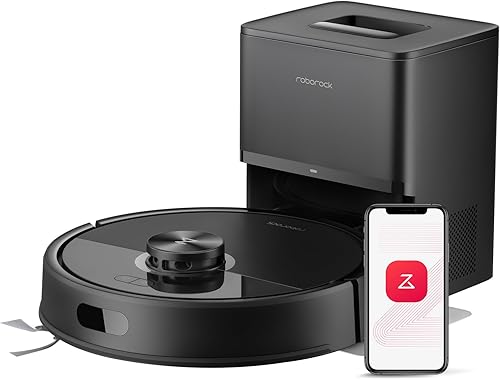
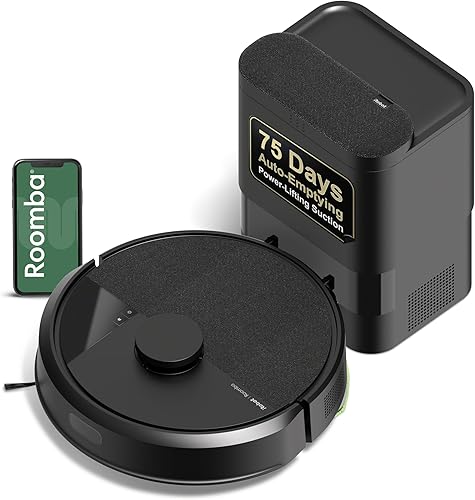
Roomba 105 Vac: for straightforward scheduled vacuuming
Roomba 105 Vac: Best for carpet-heavy homes
- Vacuum-only model
- ClearView LiDAR mapping
- Self-empty dock with up to 75 days claimed
- Targeted room and spot cleaning
The Roomba 105 Vac keeps daily care focused on dry debris. Room targeting, adjustable passes and automatic emptying suit people who want scheduled vacuuming without mop upkeep.
Pros
- Vacuum-only design
- Room targeting and keep-out zones
- 200-minute stated battery life
Cons
- Requires replacement dock bags
- Uses 2.4 GHz Wi-Fi for setup and operation
The Roomba 105 Vac suits a carpet-first home where you want scheduled vacuuming without managing a water tank or mop pad. Its vacuum-only design keeps the care routine focused on dry debris.
ClearView LiDAR maps your rooms, while the app supports room targeting, keep-out zones and changes to suction and cleaning passes. You can give the pet's favorite room extra attention without sending the robot through the whole home.
Spot cleaning repeats coverage in one area for up to 5 minutes. Use it for a dry patch of shed hair or tracked-in crumbs after clearing larger objects.
iRobot claims up to 75 days of debris storage in the AutoEmpty dock, and the stated battery life is 200 minutes. Plan cleaning around completed rooms rather than expecting the full runtime at every setting.
App, button and voice controls offer several ways to start a run. Skip this model if mopping or an explicitly anti-tangle brush system is a must, and remember to keep spare dock bags available.
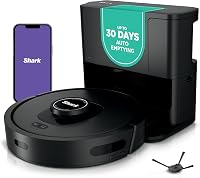
Shark AV2501S: for automatic emptying without dock bags
Shark AV2501S: Best for households avoiding disposable dust bags
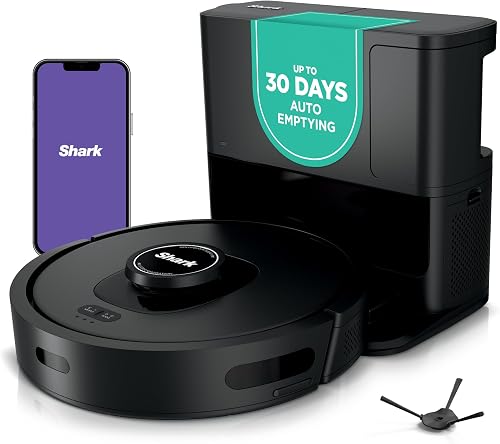
- Matrix Clean grid navigation
- Self-cleaning brushroll
- Bagless self-empty base
- HEPA filtration in the base
The Shark AV2501S suits people who want automatic bin emptying without buying dock bags. Its self-cleaning brushroll and repeated grid passes address hair buildup and carpet coverage.
Pros
- Self-cleaning brushroll for pet hair
- Bagless self-empty base
- Matrix Clean uses multiple passes
Cons
- Bagless base needs careful manual emptying
- Base holds less claimed cleaning time than the bagged picks here
Choose the Shark AV2501S if you want debris transferred out of the robot automatically but prefer to empty a reusable base. Its bagless self-empty station avoids a supply of replacement dust bags.
Shark claims up to 30 days of debris storage, and the base includes HEPA filtration. That filter serves debris containment within the system; it doesn't replace careful emptying or regular home cleaning.
Matrix Clean follows a grid with multiple passes. This approach suits rooms where you want repeated coverage across a pet's usual resting area or a busy carpeted walkway.
The self-cleaning brushroll addresses hair wrap, while LiDAR mapping supports organized routes. You can schedule cleaning through the app or start it with Alexa or Google Assistant.
Shark claims up to 120 minutes of runtime, with Recharge and Resume for continuing after charging. Allow a longer cleaning window when the job includes several rooms or repeated passes.
Skip this pick if pouring loose debris into the trash is a chore you want to avoid. A bagged station better matches that preference.
Roomba Max 715: for busy pet areas and extra cleaning passes
Roomba Max 715: Best for cluttered pet areas

- 30,000 Pa stated suction
- Dual rubber anti-tangle brushes
- Carpet Boost
- PrecisionVision AI obstacle avoidance
The Roomba Max 715 suits busy pet areas where object recognition and extra passes can help. It combines dual rubber brushes, automatic carpet boost and dirt detection.
Pros
- Dual rubber anti-tangle brushes
- Recognizes common household obstacles
- Dirt Detect adds passes in messier areas
Cons
- 120-minute stated battery life
- Requires replacement dock bags
Choose the Roomba Max 715 when object recognition and automatic attention to dirty areas matter most. PrecisionVision AI identifies common obstacles including toys, cords, socks, bowls and pet waste.
That feature is useful in busy rooms, but check the floor before every run. Keep any robot away from pet accidents, spilled liquids and objects that could catch a brush.
Dual rubber anti-tangle brushes maintain contact with different floor types, while Carpet Boost raises suction on rugs and carpet. iRobot specifies 30,000 Pa suction, the highest stated figure in this group.
Advanced Dirt Detect adds passes where debris builds up, and ClearView Pro LiDAR creates 3D maps for room-by-room routes. These features suit entryways and pet areas that need more attention than quieter rooms.
The AutoEmpty dock uses odor-control AllergenLock bags, with iRobot claiming up to 90 days between changes. Its stated battery life is 120 minutes.
Skip it if your floors are usually clear and you prefer to choose extra passes yourself. The simpler room controls on the Roomba 105 Vac may cover your routine.
ILIFE A30s: for shared remote control and manual bin care
ILIFE A30s: Best for remote-control households

- Up to 10,000 Pa in Spot Mode
- Dual anti-tangle brush
- LiDAR mapping
- Vacuum-only design
The ILIFE A30s suits households that want mapped vacuuming with an included remote. Its charging dock keeps the setup simple, while you handle bin emptying.
Pros
- Included remote control
- Dual anti-tangle brush
- App supports no-go zones and auto carpet boost
Cons
- 10,000 Pa figure applies to Spot Mode
- No self-empty base included
The ILIFE A30s suits a household where someone wants to start cleaning with a remote instead of opening an app. It includes that remote alongside app and voice controls.
Its vacuum-only design combines a dual anti-tangle brush with LiDAR mapping. The app adds room selection, virtual walls, no-go zones and automatic carpet boost.
ILIFE specifies up to 10,000 Pa suction in Spot Mode. Treat that as a setting for concentrated cleaning, rather than assuming every scheduled run uses the same suction.
The robot has a 500 ml bin and a stated battery life of 150 minutes. Plan to inspect and empty that bin frequently while you learn how much hair each room contributes.
Choose it if you can build bin care into your daily routine and want basic controls that other family members can share. App features still matter for setting boundaries and organizing mapped rooms.
Skip it if avoiding bin emptying is a main reason you're buying a robot. This A30s package includes a charging dock, rather than a self-empty station.
Roborock Q7 M5+: Best for daily cleaning in shedding-pet homes
- 10,000 Pa suction
- Dual anti-tangle main and side brushes
- 2.7 L self-empty dust bag
- PreciSense LiDAR mapping
The Q7 M5+ combines hair-wrap control, mapped routes and automatic emptying for regular carpet upkeep. Choose it when pet hair is the main job and mopping is secondary.
Pros
- Anti-tangle main and side brushes
- Sealed dust bag in the self-empty dock
- Schedules, spot cleaning and no-go zones
Cons
- Choose the Q10 S5+ if automatic mop lifting matters
- App supports 2.4 GHz Wi-Fi only
Roborock Q10 S5+: Best for carpet and hard floors
- 10,000 Pa suction
- Ultrasonic carpet detection
- Mop lifts up to 8 mm on carpets
- ReactiveTech obstacle avoidance
The Q10 S5+ suits a cleaning route that crosses rugs and hard floors. Carpet detection, automatic mop lifting and obstacle avoidance make its extra features useful in mixed-floor homes.
Pros
- Automatic carpet detection and suction boost
- Lifting sonic mop
- Obstacle avoidance and multi-level mapping
Cons
- Mop lift needs enough clearance above carpet fibers
- App supports 2.4 GHz Wi-Fi only
Roomba 105 Vac: Best for carpet-heavy homes
- Vacuum-only model
- ClearView LiDAR mapping
- Self-empty dock with up to 75 days claimed
- Targeted room and spot cleaning
The Roomba 105 Vac keeps daily care focused on dry debris. Room targeting, adjustable passes and automatic emptying suit people who want scheduled vacuuming without mop upkeep.
Pros
- Vacuum-only design
- Room targeting and keep-out zones
- 200-minute stated battery life
Cons
- Requires replacement dock bags
- Uses 2.4 GHz Wi-Fi for setup and operation
Shark AV2501S: Best for households avoiding disposable dust bags
- Matrix Clean grid navigation
- Self-cleaning brushroll
- Bagless self-empty base
- HEPA filtration in the base
The Shark AV2501S suits people who want automatic bin emptying without buying dock bags. Its self-cleaning brushroll and repeated grid passes address hair buildup and carpet coverage.
Pros
- Self-cleaning brushroll for pet hair
- Bagless self-empty base
- Matrix Clean uses multiple passes
Cons
- Bagless base needs careful manual emptying
- Base holds less claimed cleaning time than the bagged picks here
Roomba Max 715: Best for cluttered pet areas
- 30,000 Pa stated suction
- Dual rubber anti-tangle brushes
- Carpet Boost
- PrecisionVision AI obstacle avoidance
The Roomba Max 715 suits busy pet areas where object recognition and extra passes can help. It combines dual rubber brushes, automatic carpet boost and dirt detection.
Pros
- Dual rubber anti-tangle brushes
- Recognizes common household obstacles
- Dirt Detect adds passes in messier areas
Cons
- 120-minute stated battery life
- Requires replacement dock bags
ILIFE A30s: Best for remote-control households
- Up to 10,000 Pa in Spot Mode
- Dual anti-tangle brush
- LiDAR mapping
- Vacuum-only design
The ILIFE A30s suits households that want mapped vacuuming with an included remote. Its charging dock keeps the setup simple, while you handle bin emptying.
Pros
- Included remote control
- Dual anti-tangle brush
- App supports no-go zones and auto carpet boost
Cons
- 10,000 Pa figure applies to Spot Mode
- No self-empty base included
What should you compare before buying?
Compare carpet fit, brush access and emptying effort before deciding on extra features. These choices affect whether the robot can reach your floors and whether you'll keep it ready for regular runs.
Start with carpet pile and rug edges
Check your carpet's pile and care guidance before choosing a robot. Low furniture, raised thresholds and loose rug edges can block a cleaning route even when the room itself looks open.
Tall fibers can create drag, while tassels and loose threads can catch in a brush. Keep fringed edges outside the route if they repeatedly cause trouble.
Measure the lowest furniture you want cleaned underneath. Leave some clearance rather than choosing a robot that barely fits under a sofa rail.
For a room-by-room checklist, read our guide to choosing a robot vacuum for carpet.
Match brush care to the hair in your home
Long strands can wrap around brush ends and axles, while short shed hair can collect in dense clumps. Easy access for cleaning matters alongside an anti-tangle design.
Check the main roller, its end caps and the side brush during early runs. Your first few cleaning sessions will show which parts need attention most often.
Anti-tangle and self-cleaning designs reduce a common chore, but they still need inspection. Stop a run if you hear a new clicking sound or see the brush dragging trapped material.
If long strands are your main problem, see how to stop pet hair tangling.
Use suction figures to compare settings, not rank whole robots
Suction matters, but carpet cleaning also needs brush contact, airflow and enough passes over the debris. A clear intake and clean filter help preserve those conditions.
Peak figures can refer to different modes, as the A30s Spot Mode figure shows. Compare the cleaning controls you'll use, including carpet boost and repeat passes, rather than choosing solely by the largest number.
Start with a setting that collects visible debris without needlessly extending the job. Increase power or passes in the rooms that need more attention.
Choose mopping only if your hard floors need it
A mop helps with suitable hard floors, not with hair embedded in carpet. If nearly all your cleaning area is carpet, vacuum-only operation keeps the routine simpler.
For mixed flooring, decide how you'll keep a damp pad away from rugs. Automatic lifting needs enough clearance above the carpet fibers, and excluded areas may still be necessary.
The difference is explained in robot vacuum and mop vs vacuum only. Use your actual floor mix to decide, rather than adding mopping for occasional use you haven't planned.
Choose an emptying routine you'll maintain
A self-empty dock reduces trips to the robot's bin, but it doesn't clean the brush, wheels or filter. Dense hair can also block debris transfer, so inspect the intake if emptying seems incomplete.
Bagged stations collect debris in a container you remove and discard. Bagless stations avoid disposable bags but require you to tip loose material into the trash.
Storage claims are upper limits, not fixed care schedules. Hair volume, dirt and cleaning frequency determine when your base needs attention.
If this is your main buying concern, compare self-emptying robot vacuums for pet hair before settling on a model.
How should you set up a robot vacuum for pet hair and carpet?
Start with a clear route, a stable dock and supervised early runs. This helps you catch problem rugs and blocked passages before relying on a schedule.
Prepare the rooms and dock
Place the dock on a level surface with the clearance required by its instructions. Keep its approach free of bowls, shoes and furniture so the robot can return consistently.
Pick up cords, small toys, socks and loose fabric. Move lightweight pet mats if they bunch up or slide beneath the robot.
Open the doors to rooms you want mapped and close off areas you want excluded. Keep the layout consistent through the first mapping and cleaning sessions.
Finish the map before building a schedule
Follow the app's setup steps and confirm your network meets the robot's requirements. The Roborock models, Roomba 105 Vac and ILIFE A30s here require 2.4 GHz Wi-Fi.
Check room divisions and boundaries before scheduling a whole-floor clean. Mark problem corners, delicate rugs and places where the robot could disturb pet supplies.
Watch the first carpet runs for repeated stalls, rug movement or missed doorways. Correct the route or move the obstacle instead of leaving the robot to repeat the same failure.
Build the schedule around shedding and room use
Start with frequent cleaning in the rooms where hair gathers fastest. Bedrooms your pet rarely enters may need fewer runs than the living room.
Schedule around feeding and quiet time if docking noise unsettles your pet. Allow your pet to approach the parked robot at its own pace before starting a nearby run.
Add extra passes where hair remains visible. Avoid sending the robot through every room repeatedly when one high-use area needs the work.
How do you keep carpet pickup consistent?
Keep the brush, airflow path and wheels clear, and adjust care to the amount of hair collected. A shedding season may demand a much shorter maintenance interval than a quiet week.
Inspect the bin after early runs, including on a self-empty model. A packed clump near the intake can leave debris behind even when the dock has space.
Remove hair from brush ends and wheel axles before it tightens. Use the removal method in the manual so you don't damage rubber surfaces or cut nearby bristles.
Follow the filter's care instructions exactly. Don't rinse a filter unless the manual permits it, and let washable parts dry fully before reinstalling them.
Wipe sensors and charging contacts as directed, and remove grit from wheels. For a fuller routine, use our guide to cleaning a robot vacuum.
For mop models, clean the pad after use and manage water according to the instructions. Store damp parts where they can dry, rather than leaving a dirty pad against the floor.
Which mistakes cause the most trouble in pet homes?
The biggest mistakes are running over unsafe messes, delaying maintenance and expecting one pass to handle every carpet job. Fix those habits before increasing cleaning time or suction.
- Starting without a floor check: Remove pet accidents, liquids and sharp debris before the robot runs.
- Trusting obstacle avoidance with every object: Clear cords, strings and small toys even when the robot includes object recognition.
- Following dock-storage claims by the calendar: Check the bag or base sooner when shedding increases.
- Ignoring fringes and loose threads: Exclude trouble spots instead of repeatedly freeing a caught brush.
- Using damp cleaning across tall rugs: Keep the pad away from fibers it can't clear.
- Skipping deeper carpet care: Use a separate vacuum for stairs, upholstery, edges and embedded debris the robot leaves behind.
A robot is most useful as a regular floor-care tool. If you're deciding what other vacuum to keep, our robot vacuum vs stick vacuum guide explains how their jobs differ.
Which pick fits your home?
Choose the best robot vacuum for pet hair and carpet by the chore you want to reduce. For most readers here, that means frequent hair pickup, manageable brush care and less bin emptying.
- Choose the Q7 M5+ for regular carpet upkeep when mopping is a secondary need.
- Choose the Q10 S5+ when carpet detection and mop lifting will help with your mixed-floor route.
- Choose the Roomba 105 Vac for mapped, vacuum-only cleaning with automatic emptying.
- Choose the Shark AV2501S if avoiding disposable dock bags matters more than avoiding loose-debris handling.
- Choose the Roomba Max 715 when object recognition and automatic extra passes match your busy pet areas.
- Choose the ILIFE A30s if an included remote is useful and you're comfortable emptying the bin yourself.
Before ordering, confirm that your hardest room fits the robot's needs: carpet pile, rug edges, furniture clearance and space for its dock. For tall pile or dense rugs, read our guide to robot vacuums for thick carpet first.
Our top 3 picks at a glance
-
1
-
2
-
3
Frequently asked questions
What matters most in a robot vacuum for carpet and pet hair?
Prioritize a brush design that limits hair wrap, settings suited to your carpet and mapping that reaches the rooms your pet uses, then choose an emptying routine you can maintain. A self-empty dock reduces bin handling, but brushes, filters and wheels still need regular care.
Can a robot vacuum clean pet hair from carpet?
Yes, a robot vacuum can collect loose pet hair from compatible carpet and help keep shedding under control between deeper cleaning sessions, but dense, embedded hair may still need a separate vacuum. Our guide to robot vacuums on carpet explains how pile and regular cleaning affect the result.
Do robot vacuums work on thick carpet?
Some robot vacuums can clean thicker carpet, but you need model-specific guidance for your pile height and rug edges; dense fibers can restrict movement, and tall pile can touch a raised mop. See robot vacuums for thick carpet and rugs before choosing for these surfaces.
How can I reduce pet hair tangles?
Choose an anti-tangle or self-cleaning brush, then remove wrapped strands before they form a tight bundle; check brush ends, side brushes and wheel axles as well as the main roller. Our guide to stopping pet hair tangles explains where hair gathers and how to keep it manageable.